
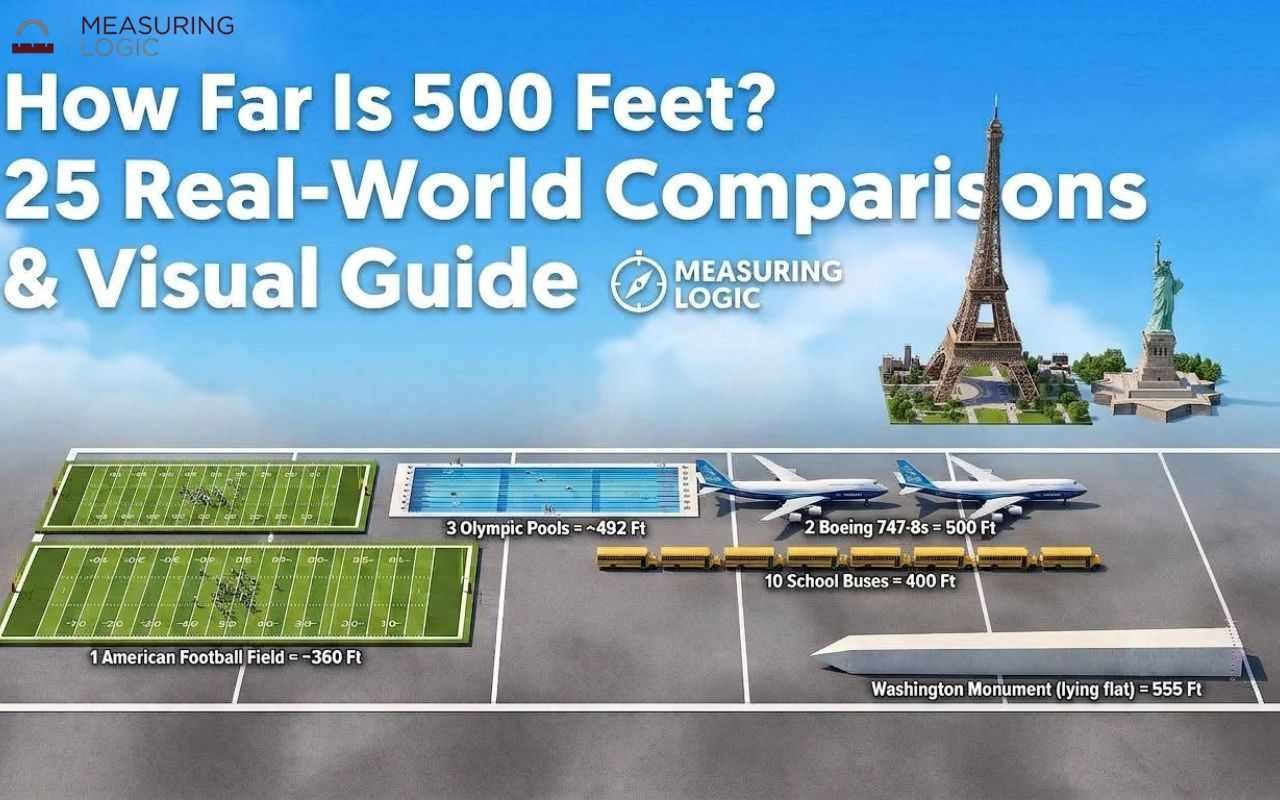
Picture two Boeing 747-8 jets parked nose to tail. That’s your 500 feet. In other units, 500 feet equals 152.4 meters, 166.7 yards, or roughly 1.4 football fields.
Numbers on a page don’t help much until you can see them. So this guide answers how far is 500 feet with 25 real objects, quick math, and a few rules that actually use this distance. Every 500-foot distance below comes from published figures. Each source is linked.
500 Feet in Other Units
Start with the basics. Feet measurement is simple once you know the conversion factor. One foot equals exactly 0.3048 meters, a definition the National Institute of Standards and Technology maintains.
| Unit | 500 feet equals |
|---|---|
| Inches | 6,000 |
| Yards | 166.67 |
| Meters | 152.4 |
| Kilometers | 0.1524 |
| Miles | 0.0947 |
That’s just under a tenth of a mile. Five hundred feet may sound like a long distance on paper. In practice, you can cover it in about two minutes on foot.
Quick Mental Math for Distance Estimation
You don’t need a calculator for distance estimation. Use one of these shortcuts:
- Exact: Multiply feet by 0.3048 to get meters.
- Fast: Divide feet by 3.3. For 500, you get about 151.5 meters.
- Rule of thumb: A meter is a little more than 3 feet. So 500 feet is a little under 170 meters if you’re rounding up.
500 Feet visual reference
Take a look at this size reference for an easy visualization.
| No. | Category | Object | How many make ~500 feet | Combined length |
|---|---|---|---|---|
| 1.1 | Sports | American football field (with end zones) | 1.4 fields | 504 ft |
| 1.2 | Sports | Football field (playing surface only) | 1.67 fields | 501 ft |
| 2 | Sports | Soccer pitch | 1.45 pitches | 500 ft |
| 3 | Sports | Olympic swimming pool | 3 pools | 492 ft |
| 4.1 | Sports | Running track straightaway | 1.5 straights | 492 ft |
| 4.2 | Sports | Running track lap | 38% of one lap | 499 ft |
| 5 | Landmarks | Washington Monument | 90% of its height | 500 ft |
| 6 | Landmarks | Great Pyramid of Giza | 1 pyramid plus 19 ft | 500 ft |
| 7 | Landmarks | Eiffel Tower | 1.33 second-level heights | 501 ft |
| 8 | Landmarks | Gateway Arch | 79% of its height or width | 498 ft |
| 9 | Landmarks | Statue of Liberty | 1.64 statues | 500 ft |
| 10 | Landmarks | Space Needle | 83% of its height | 502 ft |
| 11.1 | Landmarks | 50-story building | 50 stories at 10 ft per floor | 500 ft |
| 11.2 | Landmarks | Skyscraper floors | 36 stories at 14 ft per floor | 504 ft |
| 12 | Landmarks | The Shambles in York | 1.25 streets | 500 ft |
| 13 | Vehicles | Boeing 747-8 | 2 jets | 500 ft |
| 14 | Vehicles | Boeing 777-300 | 2 jets plus a 15 ft gap | 485 ft (500 ft with the gap) |
| 15 | Vehicles | School buses | 12.5 buses | 500 ft |
| 16.1 | Vehicles | Shipping containers (40-foot) | 12.5 containers | 500 ft |
| 16.2 | Vehicles | Shipping containers (20-foot) | 25 containers | 500 ft |
| 17 | Vehicles | Cars bumper to bumper | 33 cars | 495 ft |
| 18 | Vehicles | Cruise ship (Icon of the Seas) | 42% of the ship | 503 ft |
| 19 | Vehicles | Titanic | 57% of the ship | 503 ft |
| 20 | Aviation | Airport runway width | 3.33 runway widths | 500 ft |
| 21 | Aviation | Runway safety area width | 1 area | 500 ft |
| 22 | Energy | Wind turbine (blade tip height) | 1 turbine | 500 ft |
| 23 | Nature | Blue whales | 5 whales | 490 ft |
| 24 | Nature | Hyperion, the tallest tree | 1.3 trees | 494 ft |
| 25.1 | Urban | City blocks in Manhattan | 1.9 blocks | 502 ft |
| 25.2 | Urban | City blocks in Chicago | 0.76 blocks | 502 ft |
| 25.3 | Urban | City blocks in Portland | 2.5 blocks | 500 ft |
Sports and Recreation: 500 Feet Length on the Field and in the Pool
Sports facility dimensions make great length visualization tools. Most people have seen these spaces in person or on TV.
1. Football Fields
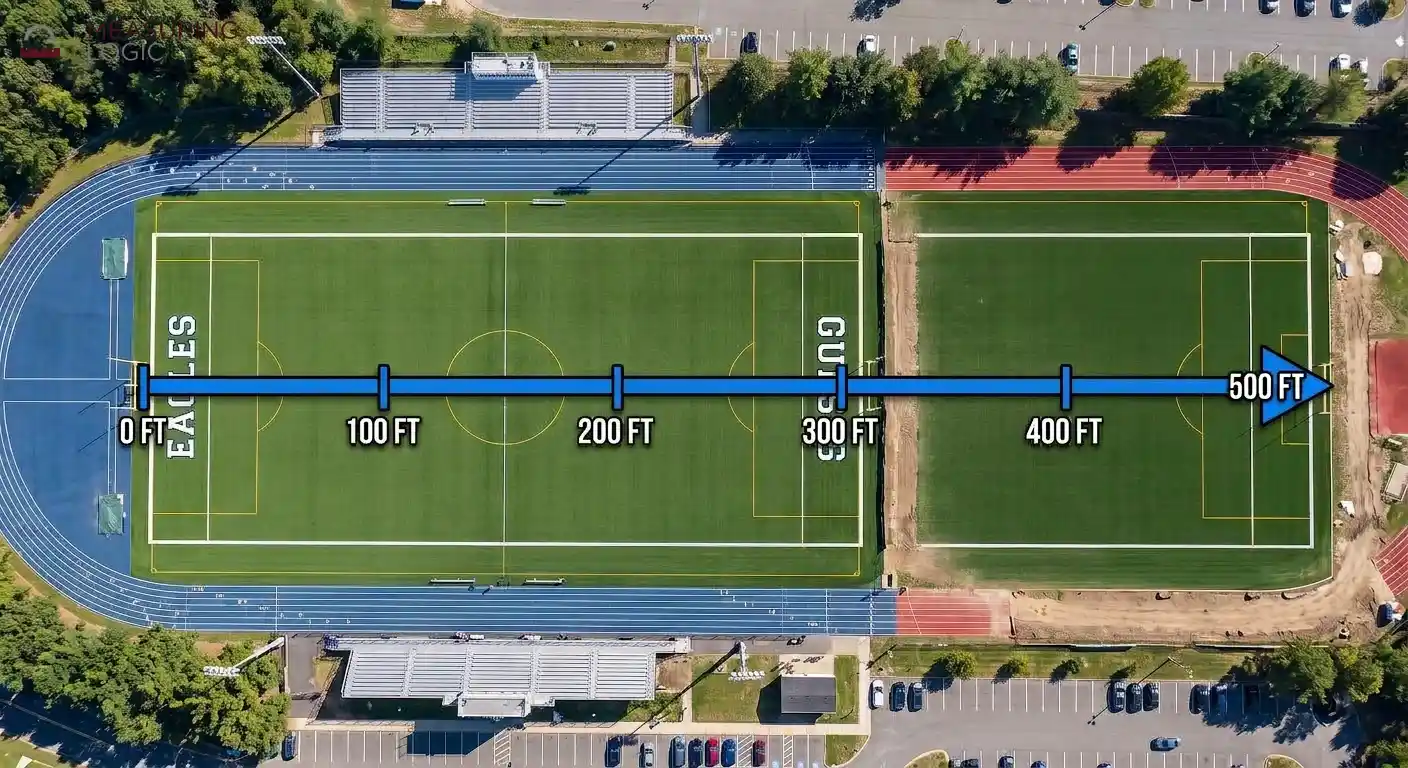
An American football field runs 100 yards between goal lines. Add two 10-yard end zones, and the total field length becomes 120 yards, or 360 feet.
Here’s how the football field comparison works out:
- With end zones (360 ft): 500 feet equals 1.39 football fields.
- Playing field only (300 ft): 500 feet equals 1.67 fields.
People often ask about five football fields. That distance is 1,500 feet on the playing surface. It’s three times longer than 500 feet.
2. Soccer Pitches
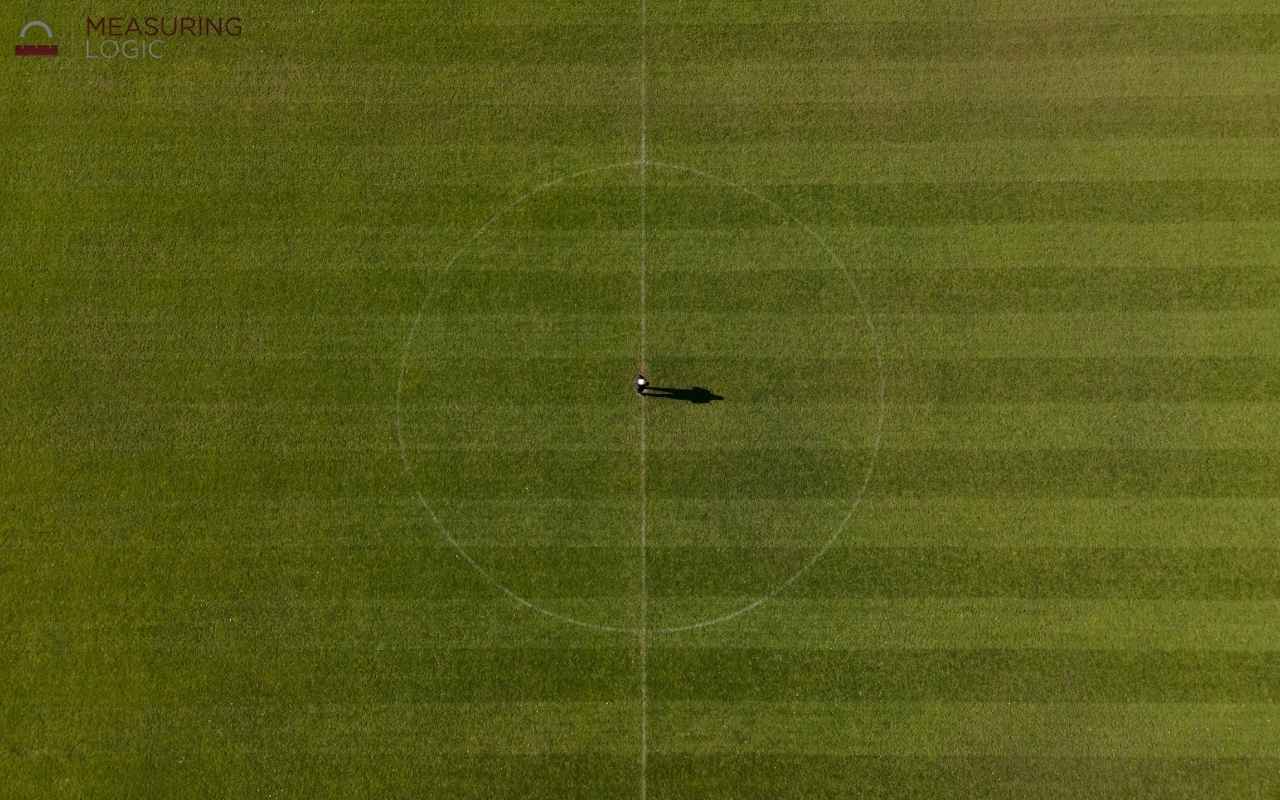
A typical professional sports field for soccer measures 105 meters, or about 345 feet. The IFAB Laws of the Game allow a range of sizes. At the common 105-meter length, 500 feet equals about 1.45 pitches. It’s a close cousin of the football field comparison.
3. Olympic Swimming Pools

An Olympic swimming pool is 50 meters long. That’s 164 feet, according to World Aquatics facility rules.
Line up three of these swimming pools end to end and you get 492 feet. Add 8 more feet and you’ve reached 500 feet. This pool comparison is one of the tightest matches you’ll find. A 50-meter pool is a handy swimming facility to remember.
4. Running Track Sections
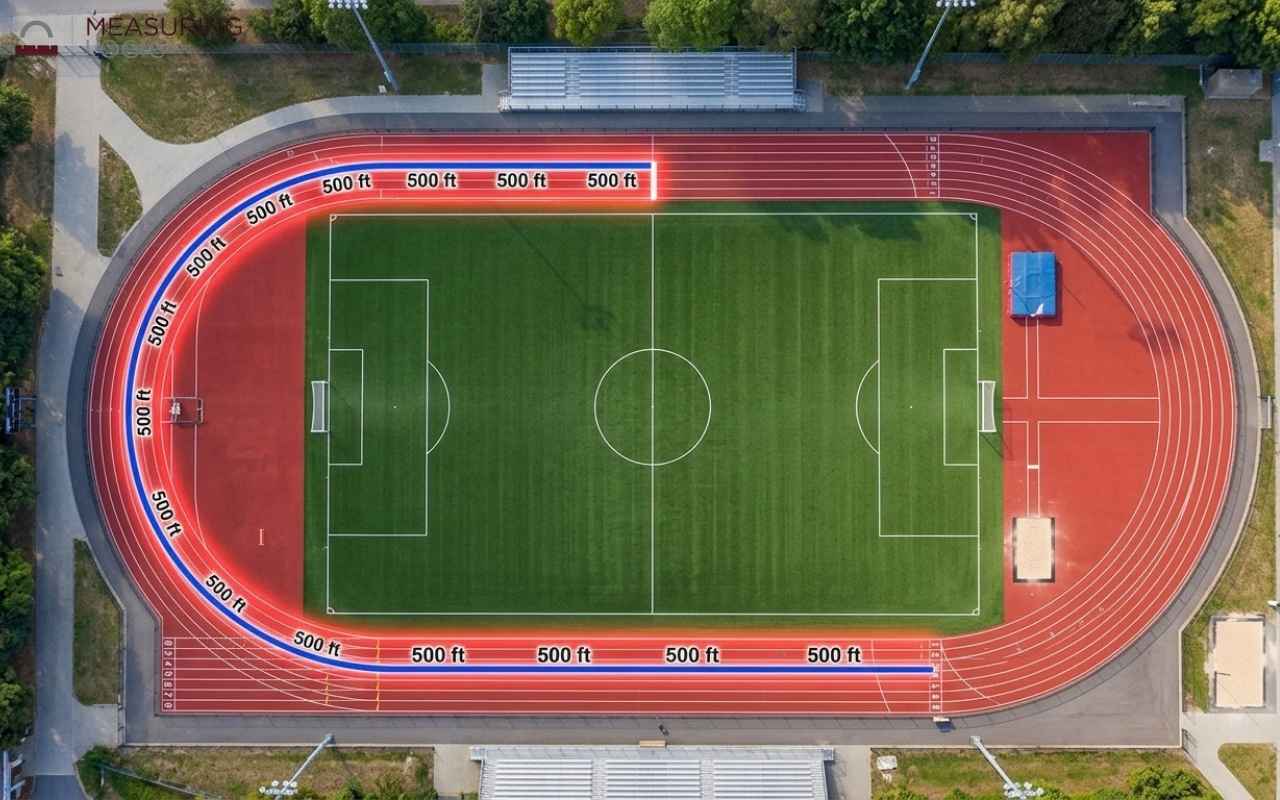
A standard outdoor track lap is 400 meters, or 1,312 feet. Here’s how 500 feet fits:
- It equals about 1.5 straightaways of 100 meters each.
- It covers roughly 38% of one lap.
A fit sprinter covers this distance in about 15 to 17 seconds.
Landmarks and Buildings: A Vertical Reference for 500 Feet
Here’s a useful note. A 500-foot height and a 500-foot length are the same distance. Your brain just pictures them differently. Tall structures create a strong vertical reference, so they’re great for landmark comparison.
5. The Washington Monument
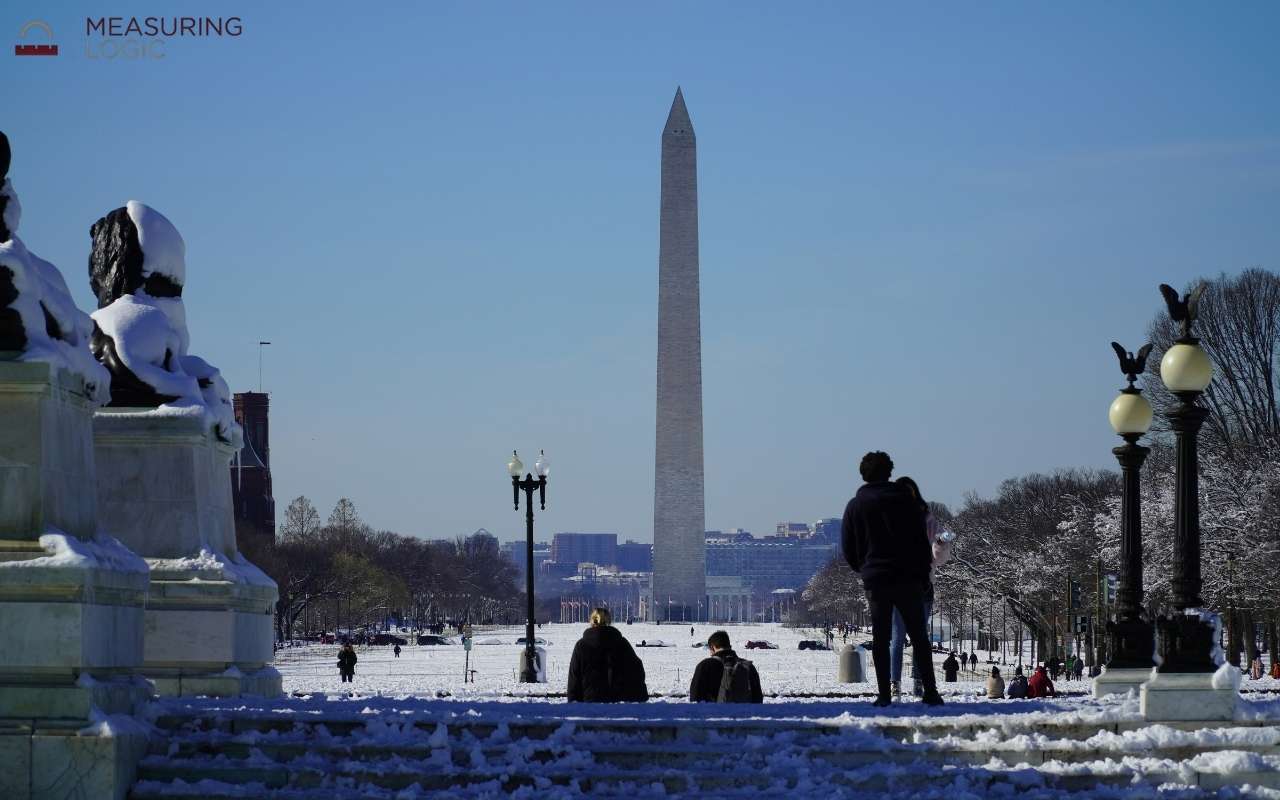
The Washington Monument stands 555 feet tall, per the National Park Service. So 500 feet equals about 90% of its monument height. Picture the top 55 feet missing. That’s your distance.
6. The Great Pyramid of Giza

Builders finished the Great Pyramid at about 481 feet. That’s shorter than five hundred feet by 19 feet. For nearly 4,000 years, it stood as the tallest structure on Earth.
7. The Eiffel Tower

This Paris landmark offers a neat tower height comparison. Its public observation level stops are:
- First level: about 187 feet
- Second level: about 377 feet
- Third level: about 906 feet
The official Eiffel Tower site lists these figures. 500 feet lands between the second and third levels. It sits about 123 feet above the second level. In other words, it’s well past what many people call the lower half of the tower. That makes it a solid vertical measurement to remember.
8. The Gateway Arch
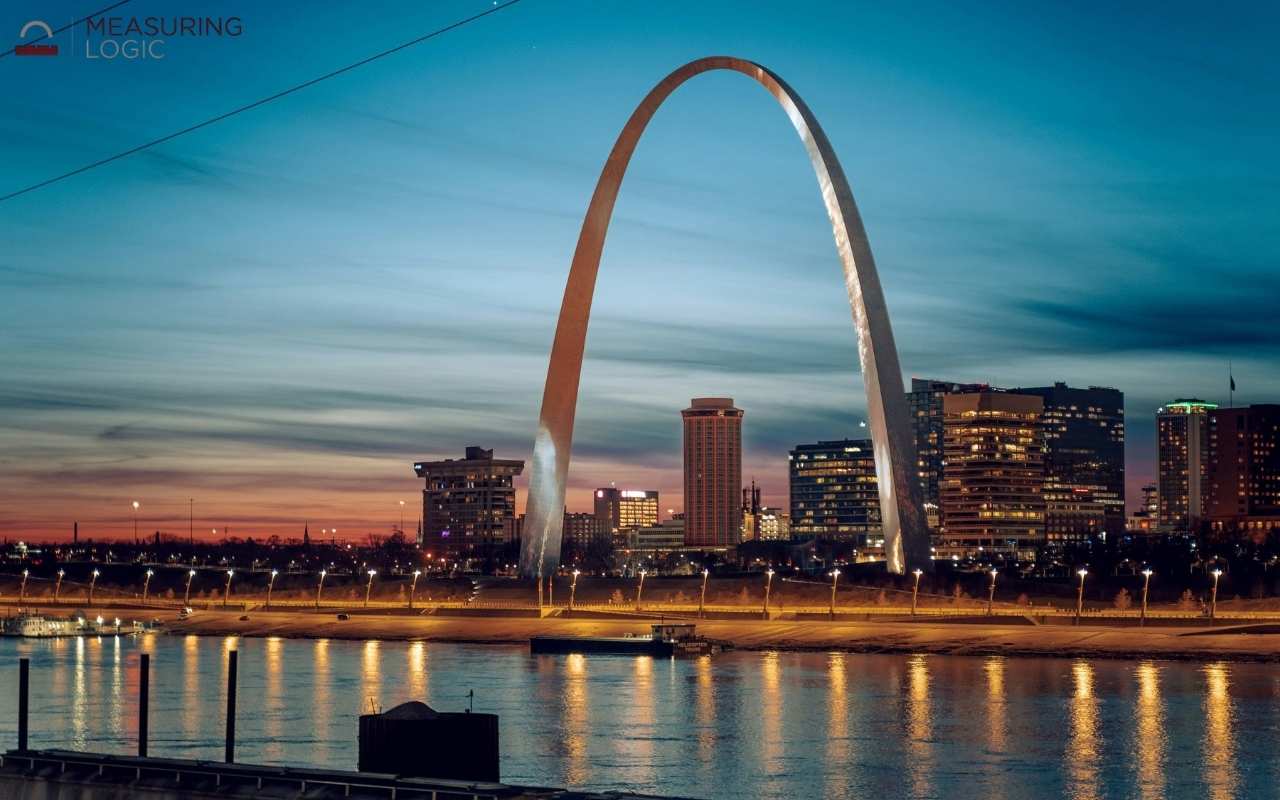
The Gateway Arch in St. Louis is 630 feet tall and 630 feet wide at its base. Both numbers come from the National Park Service. Because the ground span matches the height, it’s a rare architectural span where up and across are equal.
500 feet covers about 79% of the arch width. Walk from one leg toward the other and you’d stop roughly 130 feet short. That’s a fine example of horizontal distance at landmark scale.
9. The Statue of Liberty

The Statue of Liberty measures 305 feet from the ground to the tip of the torch. The National Park Service lists that figure. That includes the pedestal and foundation.
Stack one on top of another and you’d pass 500 ft with room to spare. In fact, 500 ft equals about 1.64 Statues of Liberty. It’s a great tall building substitute for anyone who has visited New York Harbor.
10. The Space Needle

Seattle’s Space Needle stands 605 feet tall. That makes 500 feet about 83% of its total tower height. Its observation deck sits at 520 feet. So the 500-foot distance falls just below where visitors step out to enjoy the view. It’s a very handy vertical reference if you’ve been to Seattle.
11. A 50-Story Building and Other Skyscrapers

How many 50 floors does it take to reach 500 feet? It depends on floor height.
| Floor height | Stories in 500 feet |
|---|---|
| 10 ft (tight office stacking) | 50 |
| 12 ft | 42 |
| 14 ft (generous lobbies, mixed use) | 36 |
So a 50-story building hits 500 feet only when floors are about 10 feet each. Most modern towers with 50 stories run taller than that. When someone says a skyscraper is 500 ft tall, expect roughly 36 to 45 floors.
12. The Shambles in York
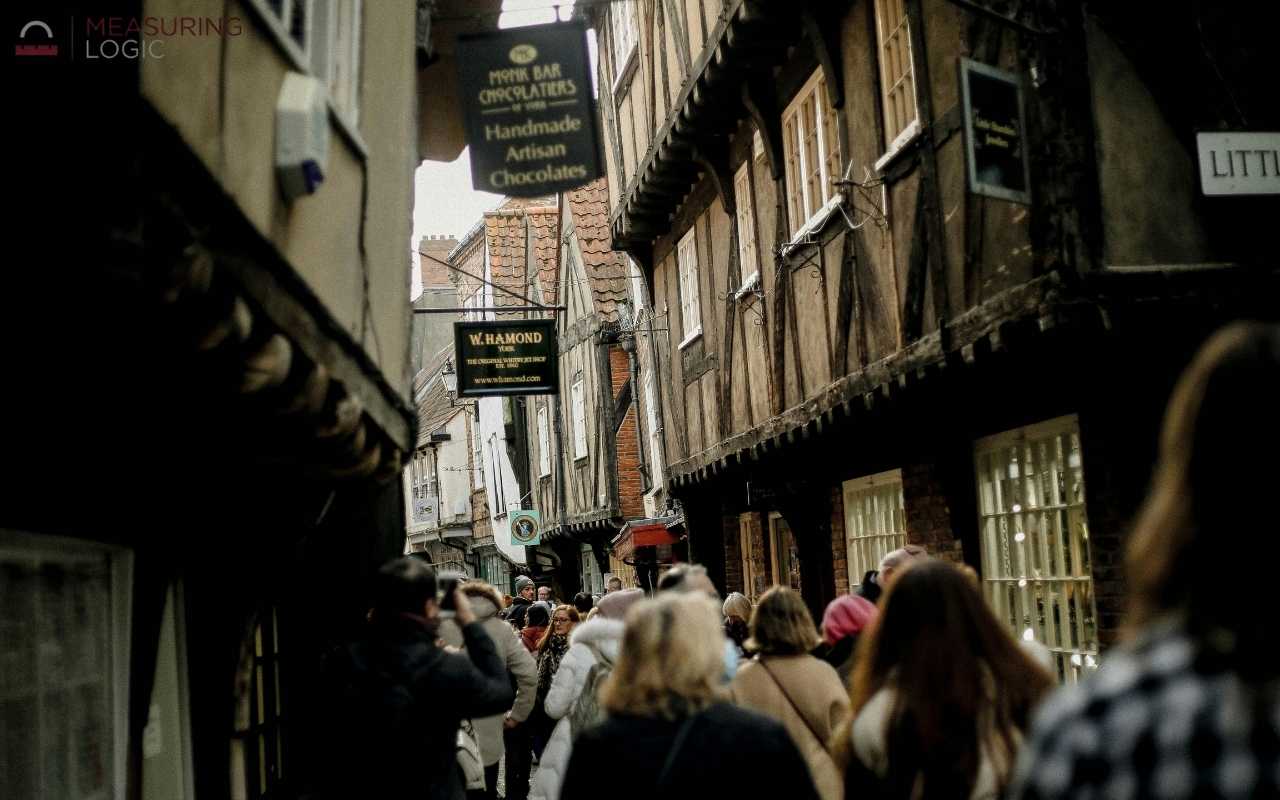
Not every comparison needs a tower. The Shambles is a medieval street in York, England. It runs about 400 feet, so 500 feet is just 100 feet longer. Walk its full cobbled length and add a few more steps. That’s your distance.
Vehicles and Ships: Transportation Reference for 500 Feet
Everyday transportation gives you the most relatable vehicle length clues. You see these things daily.
13. Two Boeing 747-8 Jets
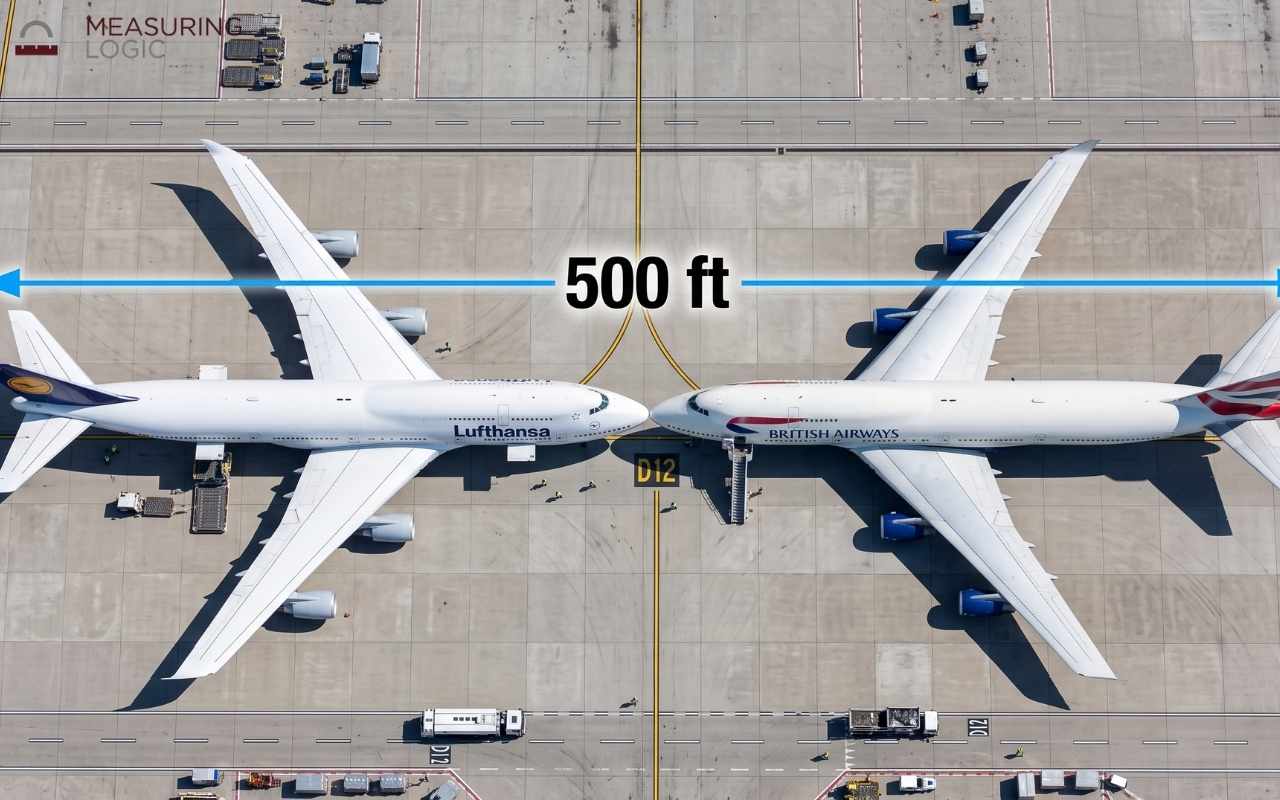
A Boeing 747-8 measures about 250 feet long. Park two nose to nose or nose to tail and you’ve got 500 feet. That’s a clean aircraft length match.
14. Boeing 777-300 Jets
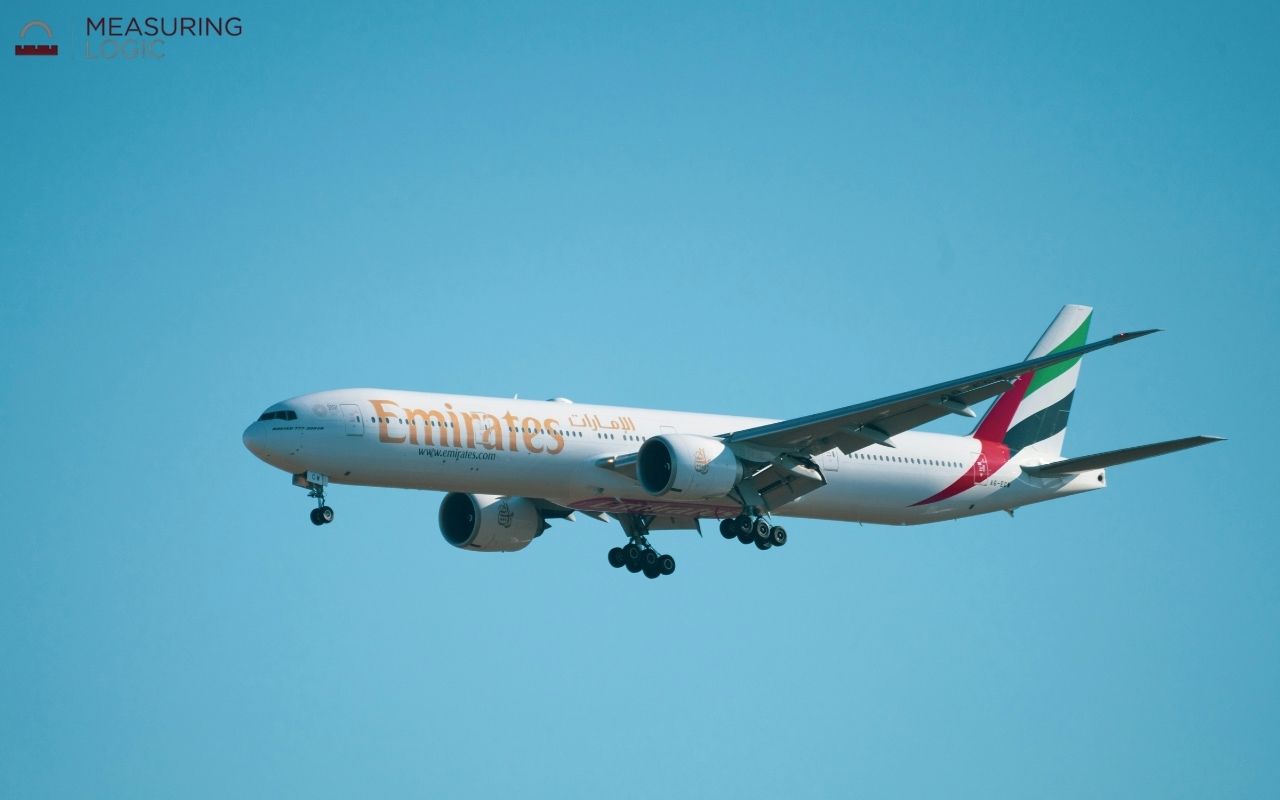
The Boeing 777-300 is a bit shorter at roughly 242 feet. Two of them total 485 feet. Add 15 feet and you’re there. These airplane dimensions help you picture the distance at any airport.
15. School Buses

A full-size school bus runs about 40 feet. Lined up, 12.5 school buses span 500 feet. That’s a good bus length benchmark for school bus comparison at your local school lot.
16. Shipping Containers

Standard shipping containers, also called cargo containers or freight containers, come in two main sizes:
- 40-foot container: 12.5 fit in 500 feet.
- 20-foot container: 25 fit in 500 feet.
Some sources round this to 10 containers. That’s off by 100 feet. Do the math with 40-foot units and you get 12.5.
17. Cars Bumper to Bumper

The average car is about 15 feet long. Packed bumper to bumper, 33 cars fit in 500 feet. In moving traffic with safe gaps, expect 20 to 25.
18. A Modern Cruise Ship

Now for scale. A modern cruise ship is huge. Royal Caribbean’s Icon of the Seas measures about 1,198 feet. So 500 feet is only about 42% of that passenger ship. Think of the bow section up to the middle of the deck space. Marine engineering at this size is hard to picture without a reference like this one.
19. The Titanic
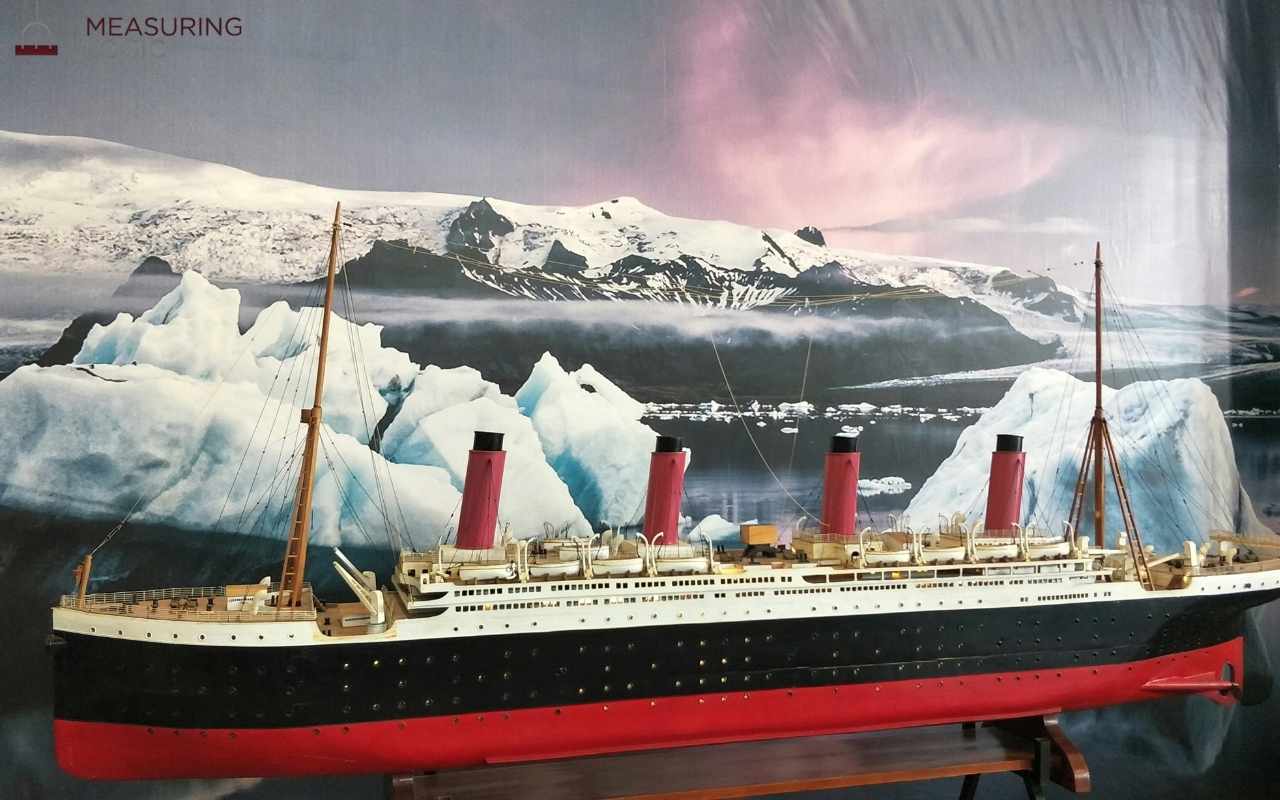
The Titanic gives a historic view. At 882 ft, it was almost twice as long as 500 ft. The distance equals about 57% of the ship. That’s a useful ship length check for anyone picturing an early ocean liner.
Aviation and Energy: Big Infrastructure Reference for 500 Feet
Airports and power sites use huge scales. 500 ft shows up in both.
20. Airport Runway Width

A typical commercial airport runway runs 7,000 to 13,000 feet long. So 500 feet is just a small runway section. Width tells a better story. Jet runways are generally 150 feet wide, so 500 feet equals more than three runway widths.
Runway touchdown markings also repeat in steps of about 500 feet. Pilots use these numbers for landing calculations. Small differences in runway measurements can change how an approach plays out.
21. Runway Safety Areas
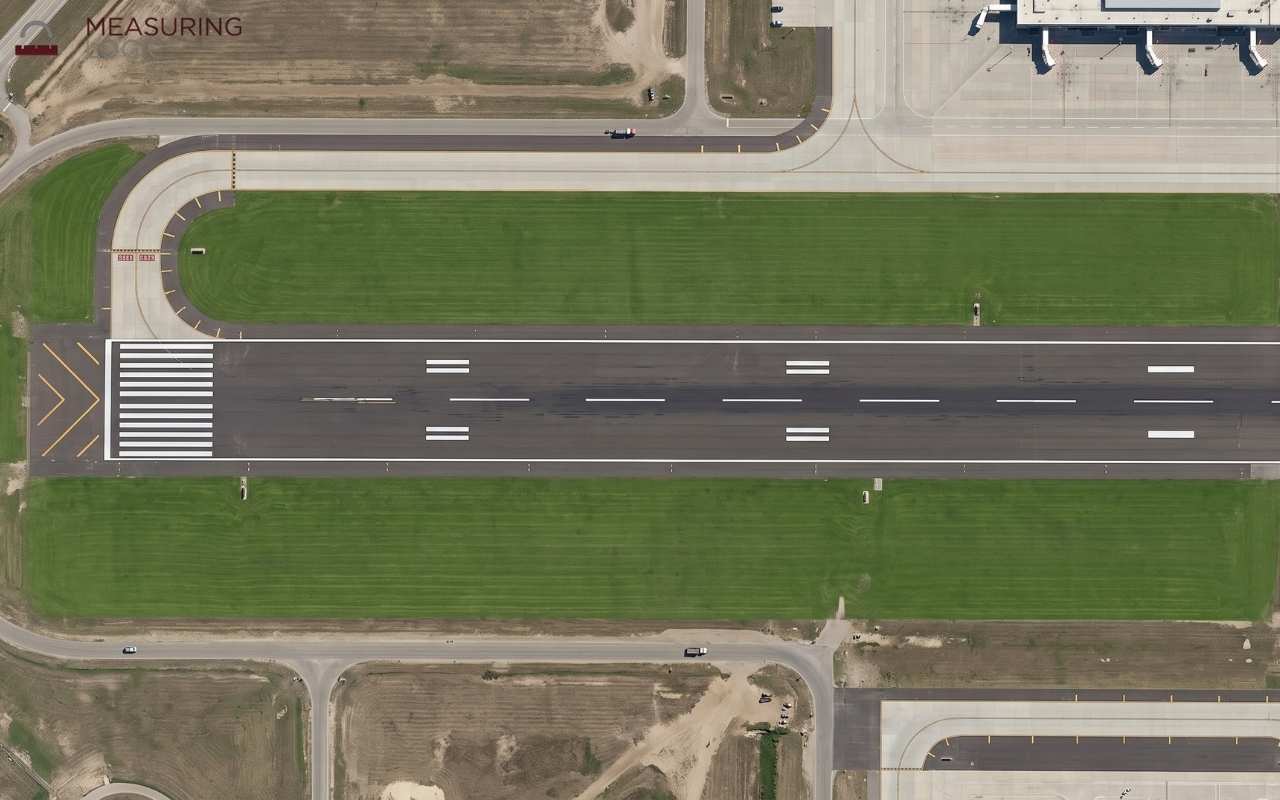
The FAA’s runway safety areas for large aircraft are typically 500 feet wide. That’s the cleared, graded space around the pavement. It adds runway protection in case an aircraft veers off. The FAA publishes the airport design standards. It’s a fine example of aviation distance built into safety rules.
22. Wind Turbines

Modern wind turbines are big. Many new land-based models now reach around 500 feet at the blade tip, according to the U.S. Department of Energy. That’s a standout example of renewable energy infrastructure and turbine height. Picture a 500-foot height with blades sweeping overhead.
Nature: Large Animals and Trees
Living things provide a unique nature comparison. They show scale in a way steel can’t.
23. Blue Whales

The blue whale is the largest animal ever known. Big adults reach about 98 feet. That’s a great whale length benchmark among marine mammals.
Divide 500 by 98 and you get about 5.1. So five blue whales nose to tail equal roughly 500 ft. No other large animals come close. It’s one of the best animal size references there is.
24. The Tallest Tree

Hyperion, a coast redwood in California, stands about 380 feet. It’s the tallest known living tree. 500 feet equals about 1.3 Hyperions stacked up.
City Streets: Urban Distance in Real Life
Anyone who walks a downtown knows city blocks. But block sizes vary a lot. That makes urban navigation trickier than you’d expect.
25. City Blocks
Here’s how 500 feet compares across three well-known cities:
| City | Typical block length | 500 feet equals |
|---|---|---|
| Manhattan (short block) | 264 ft | 1.9 blocks |
| Chicago | 660 ft | 0.76 blocks |
| Portland, Oregon | 200 ft | 2.5 blocks |
For quick street measurement, remember this: in Manhattan, 20 short blocks make a mile, whereas in Chicago, only eight blocks do. As a result, the same urban distance looks very different from city to city. For instance, your 500-foot distance might be two blocks in one town, yet less than one in another.
Click To See How 42 Inches Show Up Uniquely In Our Daily Lives
Where 500 Feet Actually Matters
This distance shows up in real rules and real life.
- Flight rules: Under 14 CFR 91.119, aircraft over open water or sparsely populated areas can’t fly closer than 500 feet to any person, vessel, vehicle, or structure.
- Drone limits: The FAA caps most small drone flights at 400 feet above ground. 500 ft sits 100 feet above that ceiling.
- Driving: At 60 mph you travel 88 feet per second. You cover 500 ft in about 5.7 seconds.
- Sound: Sound moves about 1,125 feet per second in air. It travels 500 ft in roughly 0.44 seconds.
Half a second is all it takes for a shout to cross 500 feet. A car needs almost six.
How to Measure 500 Feet Yourself
You don’t need special gear. Try one of these:
- Pace it out. An average adult step is about 2.5 feet. So plan on roughly 200 steps.
- Use a map tool. Google Maps has a “Measure distance” option. Right-click any point and choose it.
- Grab a tape. A 100-foot tape used five times gets you there.
- Use a phone app. Many measuring apps handle 500-foot distance checks with GPS.
For any feet measurement task, mark your start and end points first. That prevents drift.
How Long Is 13 Inches? Click To See 18 Everyday Objects For Comparison
500 Feet vs. 500 Square Feet
People mix these up all the time. 500 feet measures length. 500 square feet measures area.
A 500-square-foot apartment is about 22 by 22 feet. That’s a small studio. A 500-foot length is nearly seven of those studios in a row. Same number, very different picture.
How Big Is 100 Acres? Click To See Our Visualization Guide
FAQs About How Long 500 Feet Is
How many meters is 500 feet?
It equals to 152.4 meters. Multiply feet by 0.3048 for the answer. For a quick estimate, divide by 3.3. That gives you about 151.5 meters.
How many yards is 500 feet?
It equals to around 166.67 yards. Divide feet by 3. American football uses yards, so this helps with football field comparison too. It’s about 1.67 playing fields.
How many miles is 500 feet?
equals about 0.0947 miles. A mile has 5,280 feet. So this distance is under a tenth of a mile.
How long does it take to walk 500 feet?
At 3 mph, it takes about 2 minutes. At a brisk 4 mph, it takes roughly 85 seconds. Hills or crowds add time.
How many steps is 500 feet?
Expect around 200 steps. That assumes a 2.5-foot stride. Taller walkers take fewer.
How many football fields is 500 feet?
It is about 1.4 fields with end zones. Without end zones, it’s 1.67 fields.
How many cars make up 500 feet?
About 33 cars fit bumper to bumper at 15 feet each. In real traffic, 20 to 25 is more common.
Is 500 feet a long distance?
Not on foot. You’ll walk it in two minutes. In the air or in the water, though, it’s a meaningful gap. It’s also the FAA’s minimum clearance in open areas.
How Long Is 18 Inches? 18 Everyday Objects (With Pictures)
Conclusion
So, how far is 500 feet? Think of about 1.4 football fields, three swimming pools, or two jumbo jets end to end. Or picture five blue whales lined up nose to tail. It’s a two-minute walk and a six-second drive at highway speed.
Next time you need a 500 ft comparison, pick the object you know best. Then lean on the tables above. With a good size reference in your head, distance estimation gets a lot easier.
How Long Is 2 Inches? Click To See Some Fascinating Key Details

Hi, I’m Alice Arthur, the admin behind the Measurements category at Measuring Logic. I research, write, and review accurate measurement guides, unit conversions, and real-world comparisons to ensure every article is clear, reliable, and easy for readers to understand.