
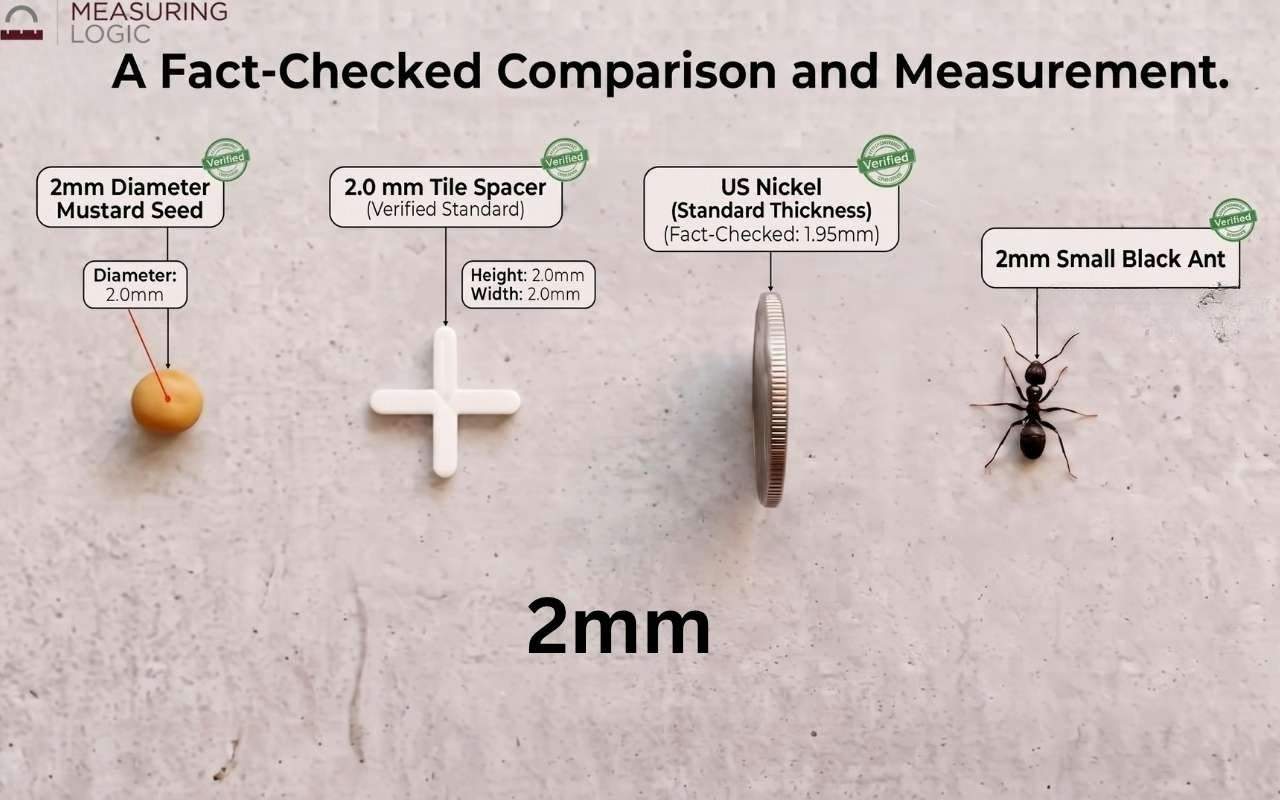
2mm is about the thickness of a U.S. nickel. Grab one from your pocket and look at the edge. That thin metal rim is your visual reference for 2 millimeters.
This guide answers how big is 2mm in plain numbers and in real-world objects. You’ll get 2mm in different units, a handy 2mm comparison table, and easy ways to check the 2mm size yourself.
How Big Is 2mm? (The Quick Answer)
2mm is a tiny measurement. It equals two thousandths of a meter. Put another way, it’s a fifth of a centimeter.
In the U.S. system, 2mm comes to about 0.0787 inches. That’s a little under 1/12 of an inch. If you picture a pinhead, you’re in the right neighborhood, though a pinhead runs closer to 1 to 2mm.
Here’s the key idea. Two millimeter size units stacked together barely cover the width of a grain of rice. Yet that gap matters a lot in tiling, electronics, and machining.
2mm in Different Units
This table shows 2mm in different units. It covers millimeter conversion to centimeters, meters, micrometers, and inches conversion.
| Unit | Value for 2mm |
|---|---|
| Millimeters | 2 mm |
| Centimeters | 0.2 cm |
| Meters | 0.002 m |
| Micrometers | 2,000 µm |
| Inches (decimal) | 0.0787 in |
| Inches (fraction) | about 5/64 in |
The closest common fraction is 5/64 inch, which equals 0.0781 in. That’s off by less than 0.05mm.
Quick tip: Don’t swap 2mm for 1/16 inch. A 1/16 inch measurement equals only 1.59mm. You’d see the difference side by side.
2mm Dimensions: Understanding What “2mm” Can Mean
People ask what is 2mm thick and then find three different answers. That’s because 2mm can describe three things:
- Thickness: how thin a flat item is, like a coin.
- Diameter: the width across a round item, like a wire or a screw.
- Length: the distance from one end of an object to the other, like an ant.
A nickel proves the point. Its coin thickness is about 2mm. Its diameter, however, is over 21mm. So always check which dimension someone means.
2mm Examples: 8 Real-World Objects That Measure About 2mm
Here are practical examples from your pocket, your toolbox, and your kitchen. Each entry says whether the 2mm dimensions apply to thickness, diameter, or length.
U.S. Nickel Coin (Thickness)
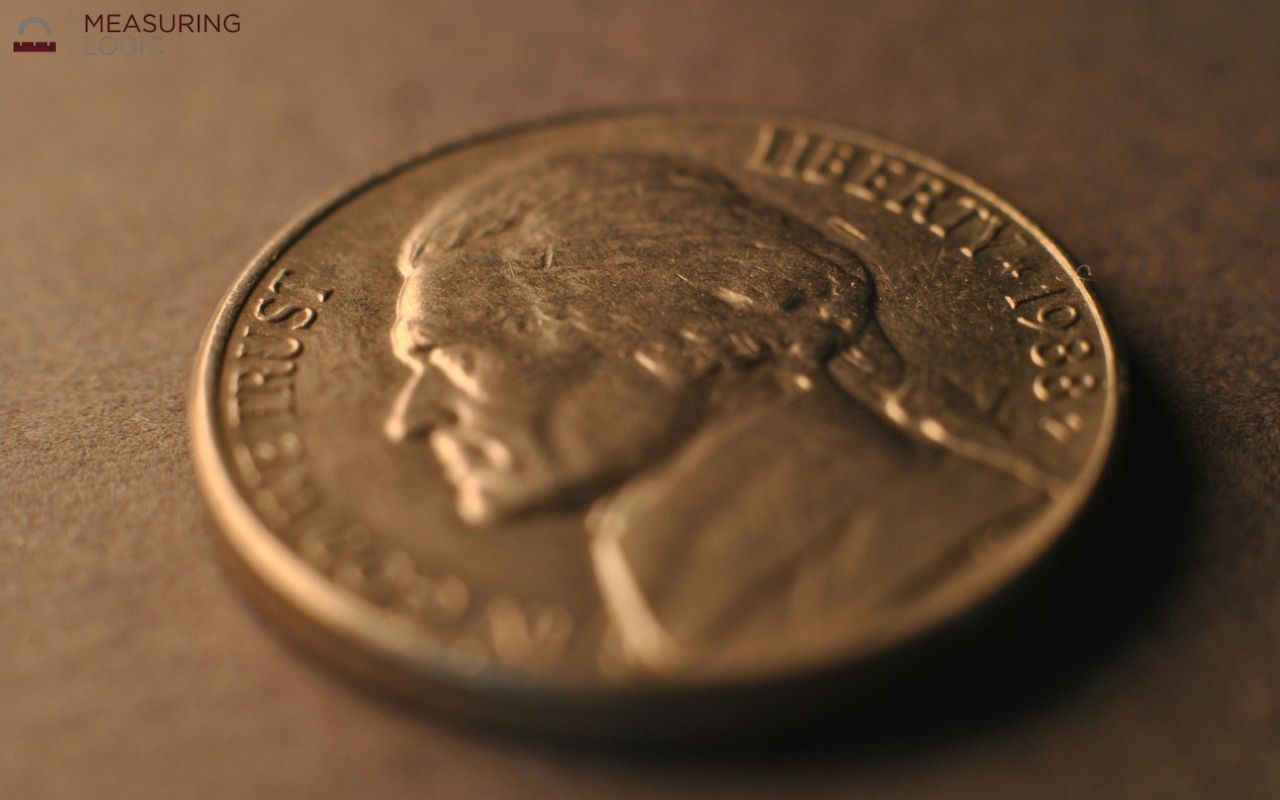
The U.S. nickel coin is the best everyday reference. According to the U.S. Mint coin specifications, a nickel measures 1.95mm thickness. Its diameter is 21.21mm and it weighs 5 grams.
Hold the nickel edge against any surface. That sliver is almost exactly 2 mm.
U.S. Dollar Coin (Thickness)
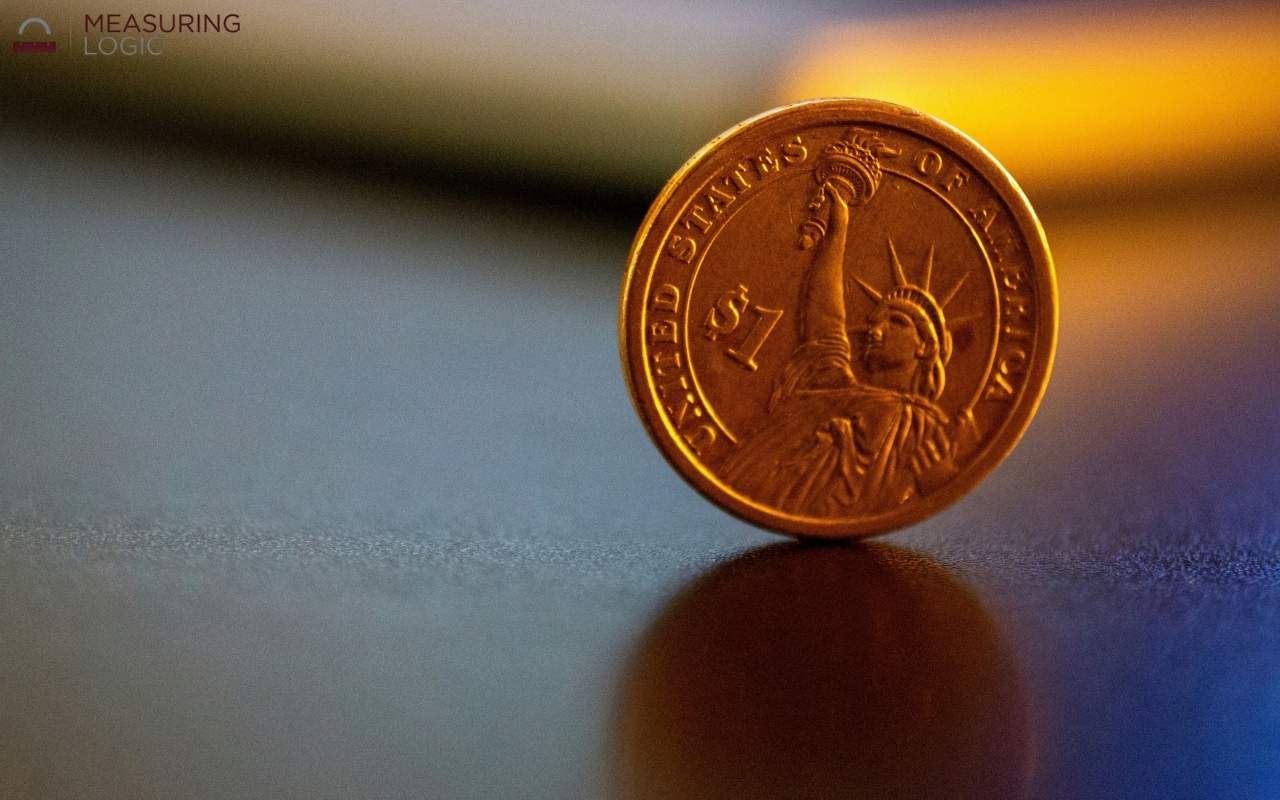
Sacagawea and Presidential dollar coins sit at 2.00mm thick. That makes them a perfect match. Their diameter is 26.49mm.
2 Euro Coin (Thickness)
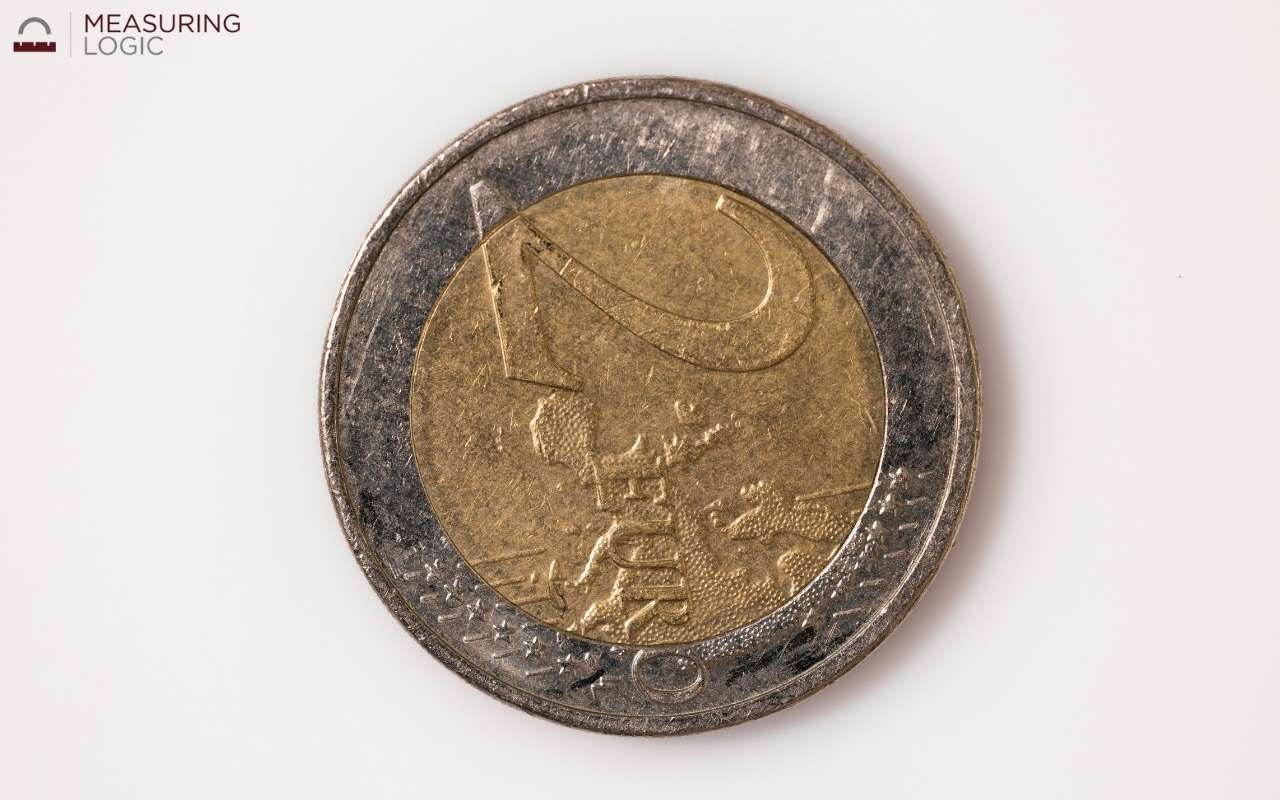
The 2 euro coin measures about 2.2mm thick. It’s slightly thicker than a nickel. Euro coin specs are published by the European Central Bank.
Ceramic Tile Spacer

A ceramic tile spacer is a small plastic cross or tee that holds tiles apart. Spacers come in sizes like 1.5mm, 2mm, 3mm, 4mm, and 5mm. A 2 mm tile spacer creates a tight, clean grout line. Installers often use it with rectified tiles, whose edges are cut straight.
This construction tool also helps with flooring alignment. It keeps tile spacing even across a whole room.
Mechanical Pencil Lead (2mm Lead Holders)
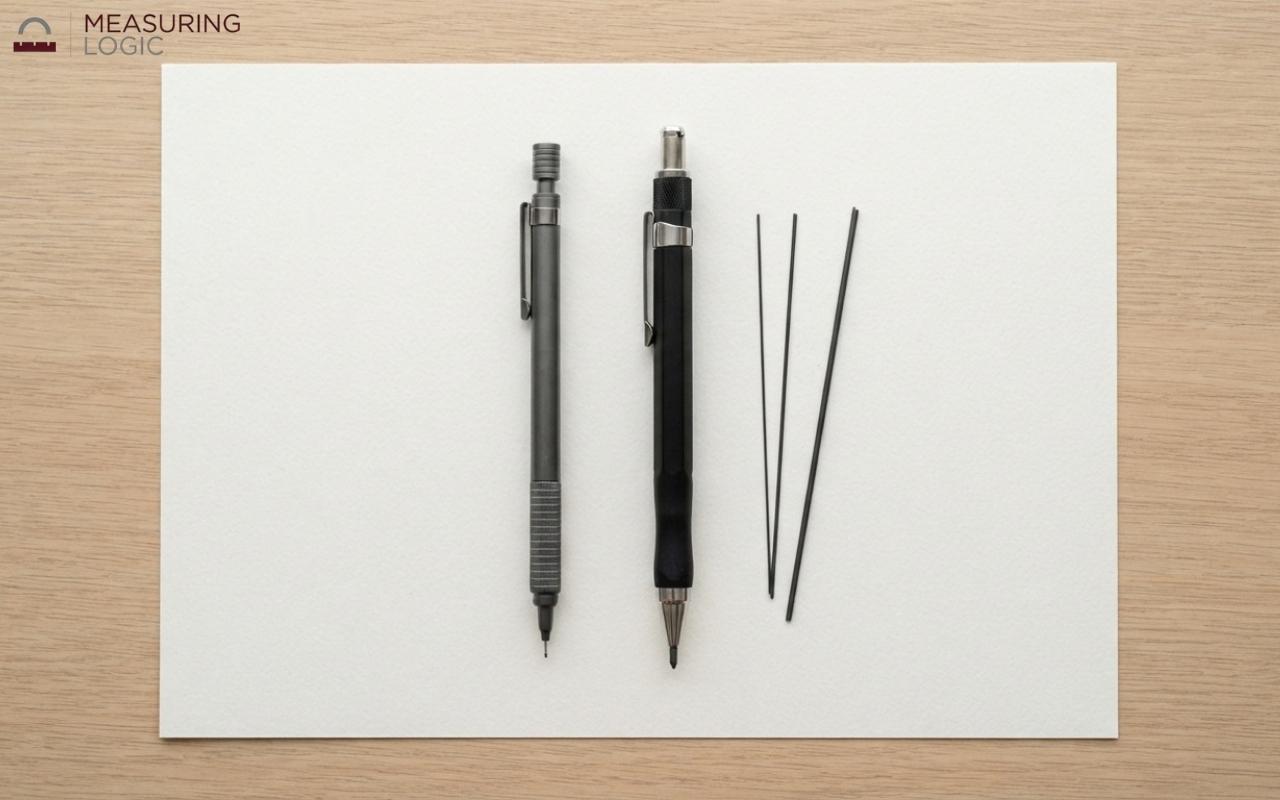
Here’s where many guides get it wrong. Standard mechanical pencil lead comes in 0.3, 0.5, 0.7, and 0.9mm. That’s much thinner than 2mm.
You can find 2 mm pencil lead in lead holders. People also call them clutch pencils. A drafting pencil like this has a pencil diameter that suits sketching and drawing lead with soft grades. Artists like the bold, smooth lines. The pencil tip gets sharpened with a small lead pointer.
12-Gauge Wire (Diameter)
Similarly, a bare 12 AWG copper wire measures about 2.05mm across. Because this is a common size for household outlet circuits in North America, it serves as a handy, everyday 2 mm diameter example that electricians encounter regularly.
M2 Screw (Diameter)
The “M2” label means the screw has a 2 mm major thread diameter. These tiny screws fit laptops, small cameras, and hobby electronics.
Don’t confuse them with watch screws or eyeglass screws. Those are often smaller. Many eyeglass screws run around 1.0 to 1.6mm. So an M2 is a bit chunkier than most of them.
Rice Grain (Thickness)

A rice grain is a surprising match. Most grains measure around 2mm thick. Their lengths differ a lot though:
| Rice type | Typical length | Typical thickness |
|---|---|---|
| Basmati rice (long-grain) | 7 to 8 mm | about 1.5 to 2 mm |
| Jasmine rice (long-grain) | 6 to 7 mm | about 1.5 to 2 mm |
| Short-grain rice | 4 to 5 mm | about 2 to 3 mm |
Remember that these sizes are typical ranges. Cooked rice swells and gets larger.
Natural 2mm Comparisons: Seeds and Insects
Nature gives you a free size reference. Use these as a rough guide only. Living things vary.
Mustard Seed

A mustard seed is a classic natural reference. Most mustard seeds are a tiny seed in the 1–2mm seed range. Yellow mustard seeds run toward the larger end. Black mustard seeds run a little smaller. A typical mustard seed diameter of 1.5 to 2 mm makes it a good pantry check.
Small Black Ant

A small black ant typically shows 2 mm in length, given that little black ant workers measure roughly 1.5 to 2 mm long. Additionally, within that 1.5–2mm range, their body width is much narrower—close to 1mm or less.
However, not all ants fit this exact size. For instance, common black garden ants run longer, at around 3 to 5mm. Consequently, an ant’s size depends heavily on its species.
2mm Comparison Table: Common Objects Side by Side
This size comparison pulls the examples together. It shows which dimension matches 2mm.
| Object | Dimension | Approx. size | Close to 2mm? |
|---|---|---|---|
| U.S. nickel | Thickness | 1.95 mm | Yes |
| U.S. dollar coin | Thickness | 2.00 mm | Yes |
| 2 euro coin | Thickness | 2.20 mm | Close |
| 12 AWG wire | Diameter | 2.05 mm | Yes |
| M2 screw | Diameter | 2.00 mm | Yes |
| 2mm tile spacer | Width | 2.00 mm | Yes |
| 2mm lead holder refill | Diameter | 2.00 mm | Yes |
| Rice grain | Thickness | about 1.5 to 2 mm | Roughly |
| Mustard seed | Diameter | about 1 to 2 mm | Roughly |
| Little black ant | Length | about 1.5 to 2 mm | Roughly |
| Wooden matchstick | Thickness | about 2 mm (varies) | Roughly |
| 1/16 inch | Any | 1.59 mm | No, thinner |
| 3/32 inch | Any | 2.38 mm | No, thicker |
The first six rows are precise thickness or diameter specs. The rest are estimates.
A word on matchstick thickness: it varies by brand and country. A typical wooden match shaft lands near 2 mm. Check your own matchbox with a ruler before you rely on it.
Where 2mm Matters in Real Work
In practice, material thickness at this scale affects strength, fit, and looks. Here are concrete examples.
- Tiling: Spacers and grout lines often use 2 mm joints for a tight look.
- Electronics: Connectors with 2.0 mm pitch, like the JST PH series, use this spacing between pins. These small components need precision measurement to line up.
- Mechanical work: M2 fasteners, 2 mm hex keys, and 2mm drill bits all share this size.
- Sheet materials: You can buy 2 mm acrylic, aluminum, and hardboard. Thickness standards vary by region and gauge system.
- Jewelry: Beads and chains at 2 mm are very common sizes.
Notice what ties these together. In each case, being off by half a millimeter causes a visible problem.
2mm Measurement on a Ruler: How to Measure Millimeters Accurately
Good news. Measuring millimeters isn’t hard once you know how to read the lines.
With a Metric Ruler
Look at your metric ruler. The numbered lines mark centimeters. The small tick marks between them each equal 1mm. Ten tick marks fill one centimeter.
So 2mm measurement on a ruler means two tick marks past your starting point. Line up the zero mark with the edge of your object. Then count two small lines.
For ruler measurement accuracy, look straight down at the ruler. Viewing from an angle shifts the reading.
With Calipers
Calipers give better results for thickness measurement. Digital calipers read to 0.01mm. They’re ideal for checking a coin, a wire, or a screw. Close the jaws gently around the object. Then read the display.
Without Tools
No ruler nearby? Use a U.S. nickel or dollar coin as a thickness check. Hold the coin on its edge next to the item. If the gap looks about the same, you’re near 2 mm.
This isn’t an accurate measurement for fine work. However, it works for quick checks.
Why an Online “True-Size” Image Won’t Work
Many sites show a line and claim it’s exactly 2 mm. Don’t trust it. Screens vary in pixel density and zoom. The same image can look different on a phone and a monitor.
Print a ruler at 100% scale instead. Then confirm it against a real ruler.
Learn How Long Is 5 Inches For Visualization
Can You See 2mm With the Naked Eye?
Yes. At normal reading distance, about 25 cm, most people with healthy vision can spot details well under 1mm. So a 2 mm gap or line is easy to see in good light.
Seeing it and judging it are different skills though. Your eyes can mislead you about small differences. That’s why installers use spacers instead of guessing.
Learn Why a Coke Can’s Dimensions Are an Engineering Marvel
Common 2mm Mix-Ups
Small units cause big confusion. Watch for these:
- 2mm vs. 2cm: 2cm is ten times larger. It’s about the width of your fingernail.
- 2mm vs. 1/16 inch: 1/16 inch is 1.59mm. It’s visibly thinner.
- 2mm vs. 3/32 inch: 3/32 inch is 2.38mm. It’s thicker.
- Diameter vs. thickness: A nickel is 21.21mm across but just 1.95mm thick.
- Gauge numbers: Sheet metal gauge doesn’t convert neatly to millimeters. Always check the chart for your material.
- Smartphone screen glass: People sometimes guess that tempered glass on a phone is 2mm. It isn’t. Most protectors and phone cover glass run well under 1mm. Typical screen protectors measure around 0.2 to 0.4mm.
Learn How Big 100 Acres Is (And Why It’s So Fascinating)
FAQs
How big is 2mm in real life?
It’s about the thickness of a U.S. nickel. It’s also close to a ceramic tile spacer, an M2 screw, or a 12-gauge wire. You can see it easily. It’s still very small.
How many inches is 2mm?
2mm equals about 0.0787 inches. The nearest fraction is 5/64 inch. Use the inches conversion in the table above for other values.
Is 2mm the same as 1/16 inch?
No. 1/16 inch equals 1.59mm. That’s about 0.4mm thinner than 2 mm.
What coin is 2mm thick?
The U.S. dollar coin is 2.00mm thick. The nickel is 1.95mm. The 2 euro coin is about 2.2mm.
How do I measure 2mm without a ruler?
Use a nickel’s edge as a visual reference. For something tougher, a few sheets of printer paper stacked up can help too. About 20 sheets make roughly 2mm, since each sheet is around 0.1mm thick.
Is 2mm smaller than 1cm?
Yes. It is one-fifth of a centimeter. So five 2mm pieces fill 1 cm exactly.
How Long Is 2 Inches? Click To See Some Fascinating Key Details
Conclusion
2mm equals about 0.08 inches. Think of a nickel’s edge. That one picture covers most situations.
Use the conversion table when you need exact numbers. Print a ruler at 100% scale when you need to check by eye. And remember that thickness, diameter, and length can all be different, so always check which one you need.
How Long Is 13 Inches? Click To See 18 Everyday Objects For Comparison

Hi, I’m Alice Arthur, the admin behind the Measurements category at Measuring Logic. I research, write, and review accurate measurement guides, unit conversions, and real-world comparisons to ensure every article is clear, reliable, and easy for readers to understand.