

You’re mid-project and need to cut 6 inches of ribbon, but your ruler is nowhere to be found. Sound familiar? Don’t worry. This guide explains how long 6 inches is and shows you how to measure it with things you already own.
Quick answer: 6 inches equals 15.24 centimeters, 152.4 millimeters, 0.1524 meters, or exactly half a foot. Keep reading for a full measurement conversion table, a list of common things that are 6 inches long, and several measuring techniques that work without a ruler.
6 Inches Conversion Table
Let’s start with the numbers. A reliable length conversion chart saves you from guesswork, so here’s every six-inch measurement you’re likely to need.
| Unit | Value for 6 Inches |
|---|---|
| Centimeters | 15.24 cm |
| Millimeters | 152.4 mm |
| Meters | 0.1524 m |
| Feet | 0.5 ft |
| Yards | About 0.167 yd |
| Kilometers | 0.0001524 km |
Notice the pattern. Every figure comes from one fixed rule, so you can rebuild this measurement conversion table anytime.
How to Convert Inches to Centimeters Yourself
The rule is simple. Multiply the number of inches by 2.54. Therefore, 6 × 2.54 gives you 15.24 centimeters.
This isn’t an estimate. In 1959 the United States and several other countries agreed that one inch equals exactly 2.54 centimeters. The National Institute of Standards and Technology (NIST) uses that definition today. As a result, inches to centimeters math never involves rounding unless you choose to round.
Want to go the other way? Divide centimeters by 2.54. For example, 20 cm ÷ 2.54 equals about 7.87 inches.
Here’s a handy shortcut for your head:
- 1 inch ≈ 2.5 cm (close enough for quick checks)
- 6 inches ≈ 15 cm (close, but see the next section)
- 12 inches = 30.48 cm
6 Inches vs. 15 cm: Are They the Same?
Not quite. In fact, 15 cm equals about 5.91 inches. That gap is only 0.09 inches, or roughly 2.3 millimeters. For a birthday card, nobody cares. For woodworking, cake pans, or a snug-fitting part, it matters a lot.
Rule of thumb: If the job needs precision, use 15.24 cm (or 152.4 mm). Use 15 cm only when “close enough” really is enough.
What Does 6 Inches Look Like?
Numbers help; pictures help more. So, what does 6 inches look like in real life? Picture the length of a short pencil stub, a small paperback’s height, or the span from your wrist crease to the tip of your middle finger on a smaller hand. Of course, hands vary, so keep reading for better references.
Next to a Standard Ruler
A typical school ruler measures 12 inches. Consequently, 6 inches sits at the exact midpoint.

Each inch splits further into 16 tiny marks on most US rulers. Meanwhile, the flip side usually shows centimeters, where 6 inches lands just past the 15 cm line.
Printable Actual-Size Ruler Tip
You can make a quick measurement tool at home. Draw a straight line on a sheet of paper, then mark 0 and 6 using a real ruler once. Afterward, keep that strip in your wallet or toolbox.
If you print a ruler from the web instead, set the print scale to 100% (often labeled “Actual size”). Otherwise, your browser may shrink the page and ruin the measurement. Always check the printout against a trusted ruler before you rely on it.
Everyday Objects That Are About 6 Inches
Now for the fun part. Here are common things that are 6 inches long, along with their real measurements. Some match perfectly; others come close. Either way, these six-inch examples give you a dependable visual size comparison.
| Object | Actual Length | Difference from 6 in. |
|---|---|---|
| US dollar bill | 6.14 in | +0.14 in |
| 4×6 photo print (long side) | 6.00 in | Exact |
| 4×6 index card (long side) | 6.00 in | Exact |
| 8 US pennies, edge to edge | 6.00 in | Exact |
| 3 AA batteries, end to end | About 5.97 in | −0.03 in |
| Typical ballpoint pen (many models) | About 5.5–6 in | Close |
| Standard hot dog bun (many brands) | About 6 in | Close |
| 6-inch mini ruler | 6.00 in | Exact |
| Google Pixel 9 (height) | About 6.02 in | +0.02 in |
| iPhone 16 (height) | About 5.81 in | −0.19 in |
| 6×6 ceramic tile (side) | 6.00 in | Exact |
| 60d spike nail | 6.00 in | Exact |
That’s twelve objects measuring six inches (or very close to it). Let’s look at the best ones in detail.
Dollar Bill
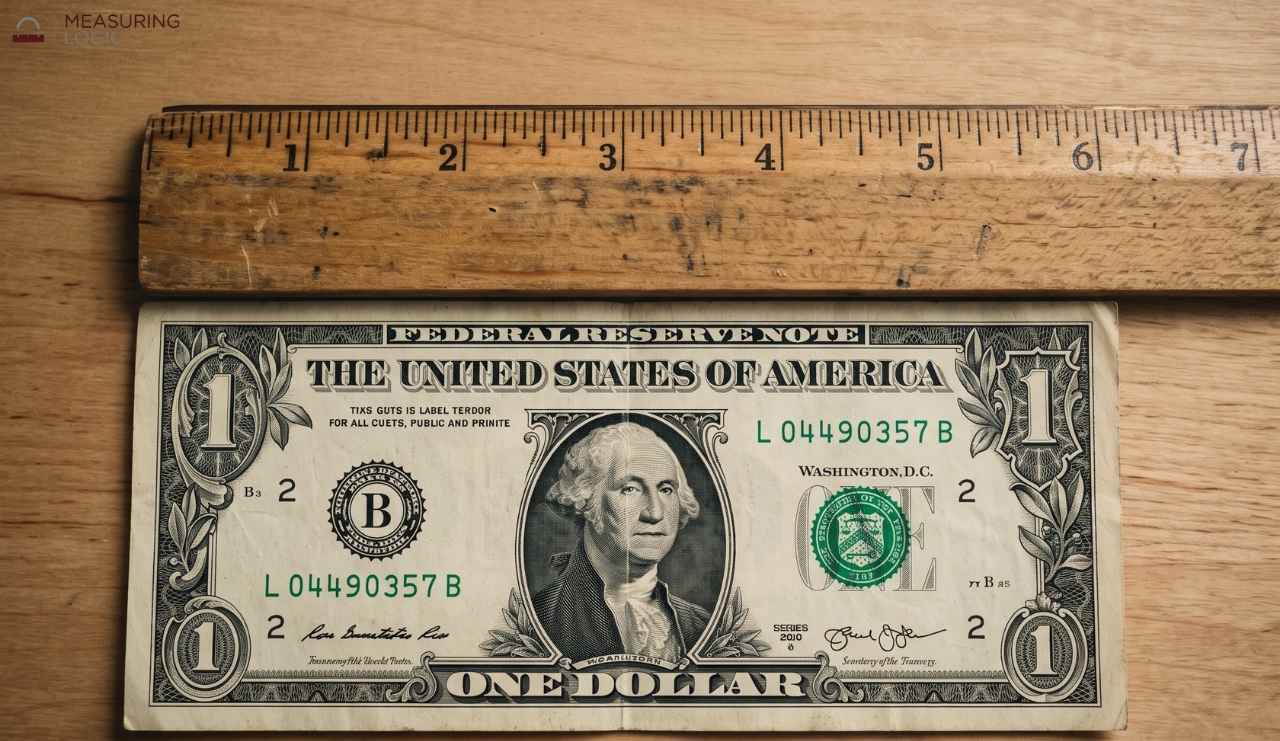
The dollar bill is the champion of everyday measurements. According to the US Currency Education Program, all Federal Reserve notes share the same size: 6.14 inches long and 2.61 inches wide. Every denomination matches, so a one, a five, and a hundred all work.
Because you probably carry cash or can borrow a bill, this trick works almost anywhere. Just remember the extra 0.14 inches (about 3.5 mm). You can tuck that tiny bit under your thumb.
Index Cards and Photo Prints

A 4×6 index card or photo print measures exactly 6 inches on the long side. Therefore, it’s one of the most accurate household items for length estimation. Teachers, scrapbookers, and office workers keep these on hand all the time.
Pennies and AA Batteries
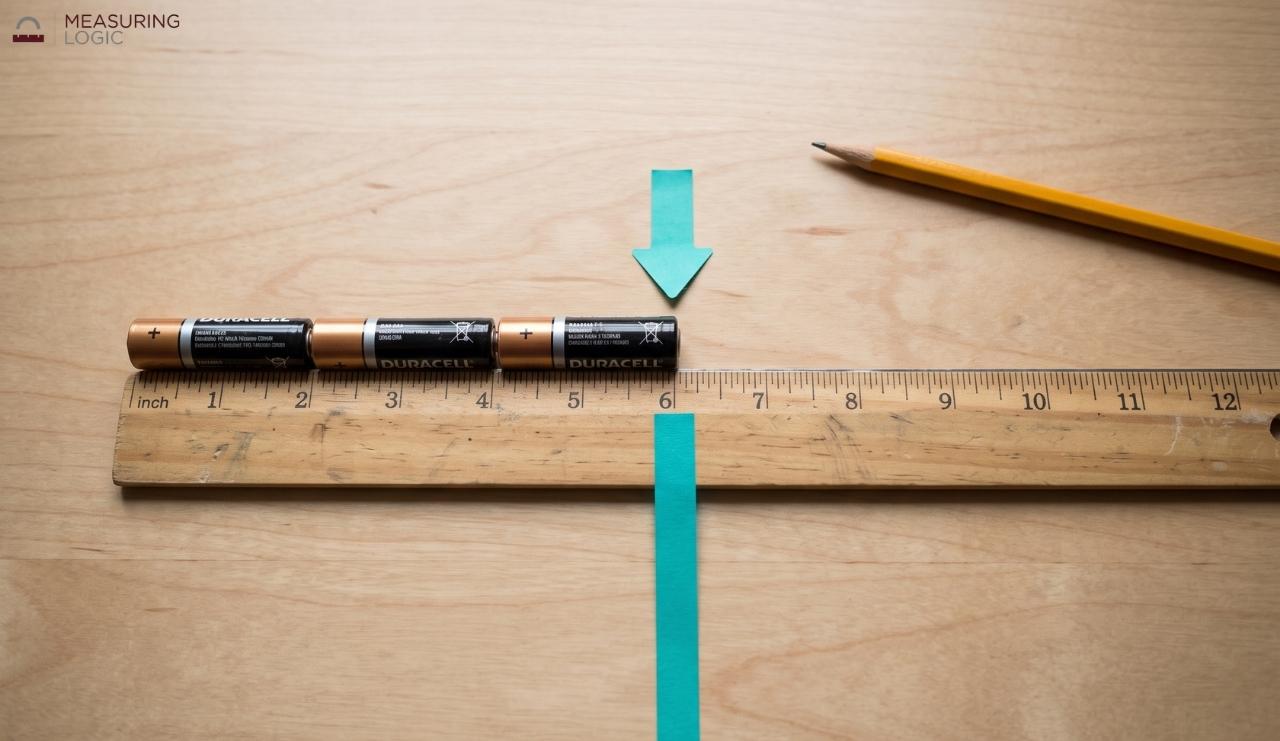
A US penny measures 19.05 millimeters across, which equals exactly 0.75 inches. As a result, eight pennies lined up edge to edge give you precisely 6 inches. That’s a neat party trick.
AA batteries also help. A standard AA runs about 50.5 mm long at its maximum, so three of them stretch to roughly 5.97 inches. In other words, three AAs get you within a hair of 15.24 centimeters.
If you only have other coins handy, here’s how many you need:
- Penny: 8 coins (exact)
- Nickel: about 7.2 coins
- Quarter: about 6.3 coins
- Dime: about 8.5 coins
Smartphone Size

Smartphone size is tricky because models vary so much. However, many modern phones land near six inches tall. For example, the Google Pixel 9 measures about 6.02 inches in height, while the iPhone 16 measures about 5.81 inches. Check your own device’s spec sheet for mobile phone dimensions, then measure it once against a ruler. After that, you’ll own a handy reference.
Plus, don’t confuse height with screen size. Phone makers advertise screens by their diagonal, so a “6.1-inch” display doesn’t mean the phone is 6.1 inches tall. We’ll revisit that point below.
Hot Dog Buns and Other Food Items
Many standard hot dog buns run about 6 inches long. Likewise, 6-inch tortillas and many small cake pans use that same figure. Still, brands differ, so verify before you bake or cook anything that depends on exact size.
How to Measure 6 Inches Without a Ruler
You’ve got options. Most of these measuring techniques need nothing but items from your pocket or kitchen drawer. Even so, each method has its own accuracy level.
Fold a Dollar Bill
This one’s the easiest near-exact method. Lay the bill flat and align one short edge with your starting point. The opposite short edge lands at 6.14 inches. Then subtract about an eighth of an inch from your mental mark.
Use a 4×6 Print or Index Card
Place the card along your line with one corner at zero. Its long edge ends at exactly 6 inches. Therefore, it’s the most precise ruler-free choice if you have one nearby.
Line Up Coins or Batteries

Eight pennies give you 6.00 inches. Three AA batteries give you about 5.97 inches. Both work well on a flat surface. However, you need to keep the items perfectly straight and touching, or small gaps will add error.
Use Your Hand or Fingers

Your body is a ruler you carry everywhere. Even so, bodies differ. Here are typical averages for adults:
- Finger width: Roughly 0.6 to 0.75 inches across the index finger. So 8 to 10 fingers side by side equal about 6 inches.
- Palm width: Around 3 to 3.5 inches. Two palms side by side get you near 6 to 7 inches.
- Thumb joint: Close to 1 inch from knuckle to tip on many adults.
- Hand span: Thumb tip to pinky tip often runs 7 to 9 inches.
Calibrate once. Hold your hand against a real ruler, then write down your own numbers. For example, “my index finger is 0.7 inches” or “my palm is 3.2 inches.” From then on, you’ll have a personal length estimation tool that’s far better than any average.
Use Your Phone
Many phones offer a built-in measuring app. It uses the camera to estimate distances. Alternatively, some apps display an on-screen ruler. Both are handy; however, neither matches a real ruler for accuracy. Camera apps can drift by a quarter inch or more, depending on lighting and surface.
Ballpoint Pens
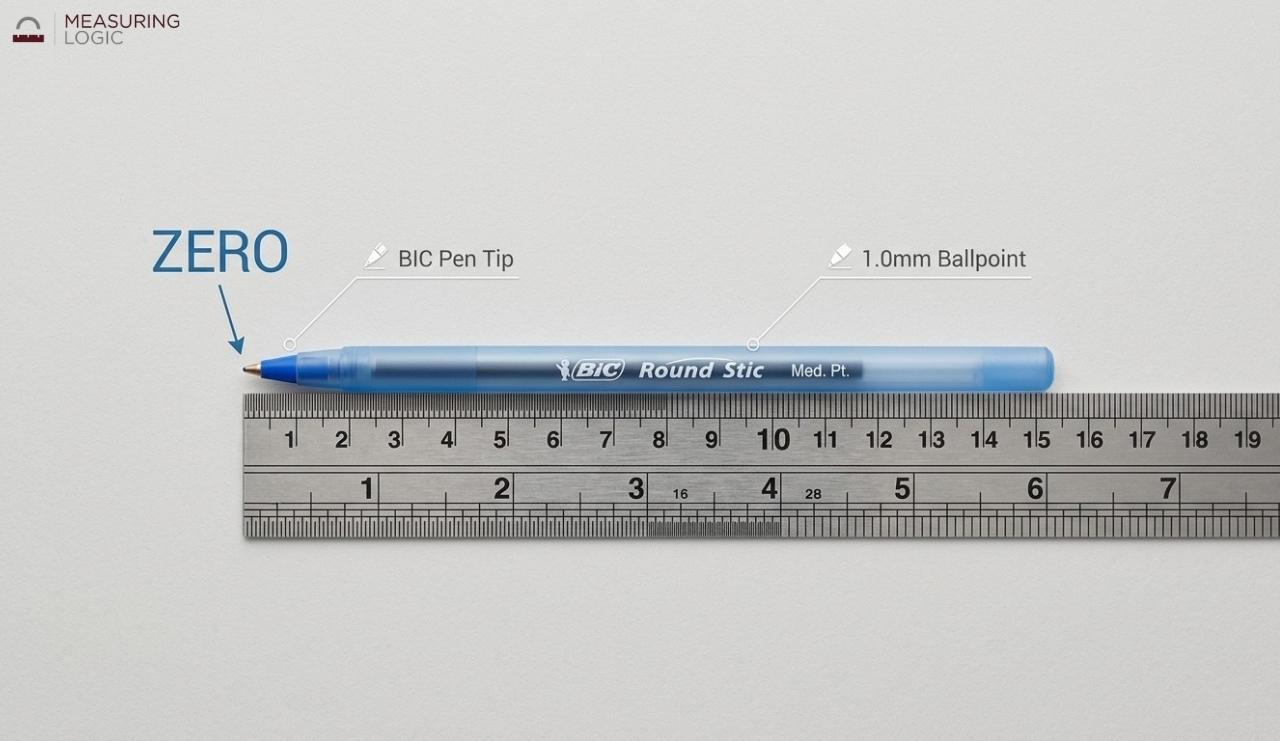
A standard ballpoint pen is one of the handiest everyday objects for a quick six-inch measurement. Most disposable stick pens, like the classic BIC Round Stic, run about 5.9 inches (roughly 150 mm) from tip to end. That’s only a hair under 6 inches, so you can treat it as a close match for length estimation.
However, not every pen fits the mold. Retractable pens grow longer when you click the tip out. Capped pens change length depending on whether the cap sits on the back or the front. Meanwhile, fancy metal pens often run 5.5 inches or shorter.
Quick tips for using a pen as a ruler:
- Pick a plain stick pen. Skip clicky, chunky, or gel models with grips.
- Check it once. Hold it against a real ruler and note the exact length.
- Measure it uncapped. Cap position changes the result.
- Keep it flat. A tilted pen reads shorter than it really is.
Method Comparison

| Method | Accuracy | Best Use |
|---|---|---|
| 4×6 index card | Excellent (exact) | Crafts, paper projects |
| 8 pennies | Excellent (exact) | Flat surfaces, quick checks |
| 3 AA batteries | Very good | Desk or table measuring |
| Dollar bill | Good (+0.14 in) | Anywhere you have cash |
| Calibrated fingers | Fair | Rough estimates |
| Phone camera app | Fair | Quick sizing of larger items |
| Uncalibrated hand | Poor | Ballpark only |
Where 6 Inches Shows Up in Real Life
This measurement appears everywhere. Once you notice it, you’ll see it constantly. Here are the most common spots.
Food and Cooking
Fast-food menus love this number. For instance, Subway’s “6-inch” sub gets its name from a nominal size. Treat that label as a menu name rather than a promise, because actual bread lengths vary slightly.
Other kitchen examples include:
- 6-inch tortillas for tacos
- 6-inch cake pans for small layer cakes
- Personal pizzas (often 6 to 8 inches across)
- Kitchen utensils like teaspoons, which often run 5.5 to 6.5 inches
Home and DIY
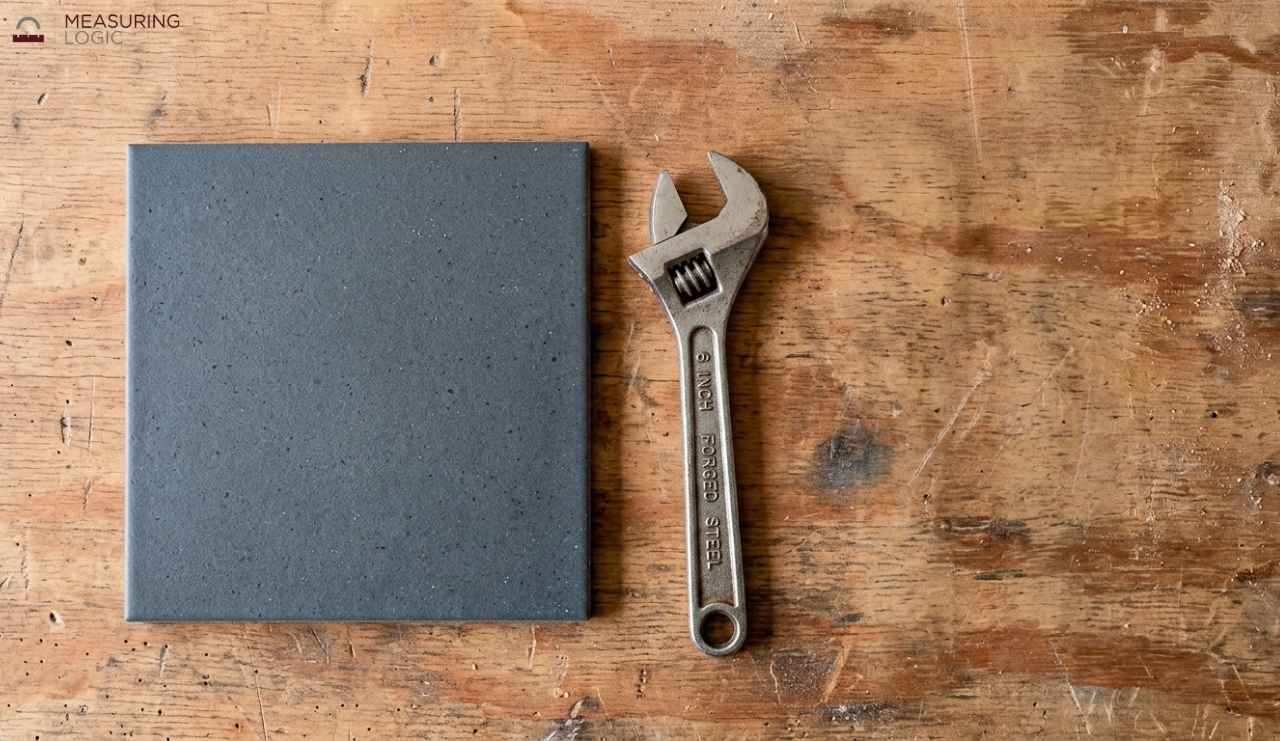
Builders and DIYers use this size daily. As a result, you’ll find household tools and materials made around it:
- 6×6 tiles for floors and backsplashes
- 6-inch ducts and pipes in ventilation and plumbing
- 60d spike nails, which measure 6 inches long
- 6-inch calipers for small precision work
- 6-inch adjustable wrenches and pliers in many toolboxes
Weather
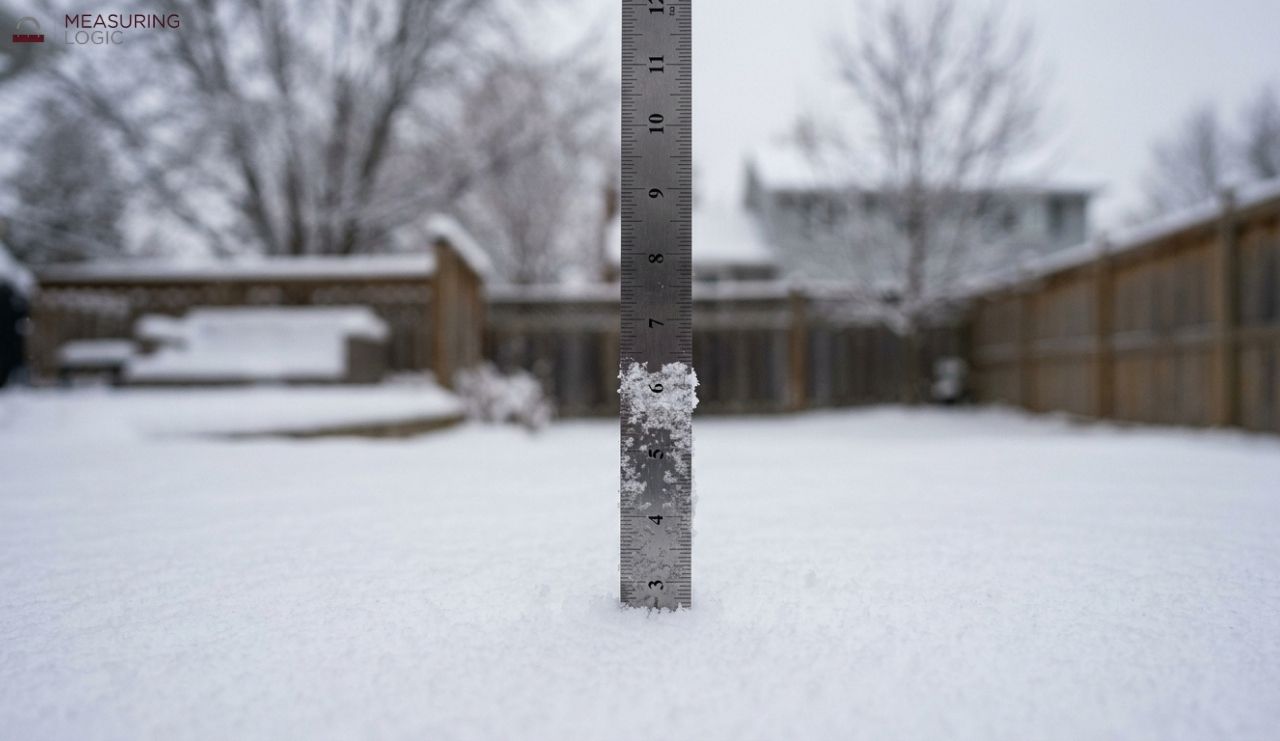
Weather reports love inches too. A forecast of 6 inches of snow means a serious shovel session. Most cars can drive through it slowly; however, it covers curbs and hides ice. Meanwhile, 6 inches of rain in a short period can cause flash flooding in some areas. Check the National Weather Service for current guidance in your region.
Fashion
A 6-inch heel stands tall. Designers usually measure heel height from the base of the heel at the back to where it meets the shoe. Therefore, a “6-inch heel” doesn’t mean the whole shoe is 6 inches. It also raises the foot’s angle quite a lot, so comfort drops fast.
Screens
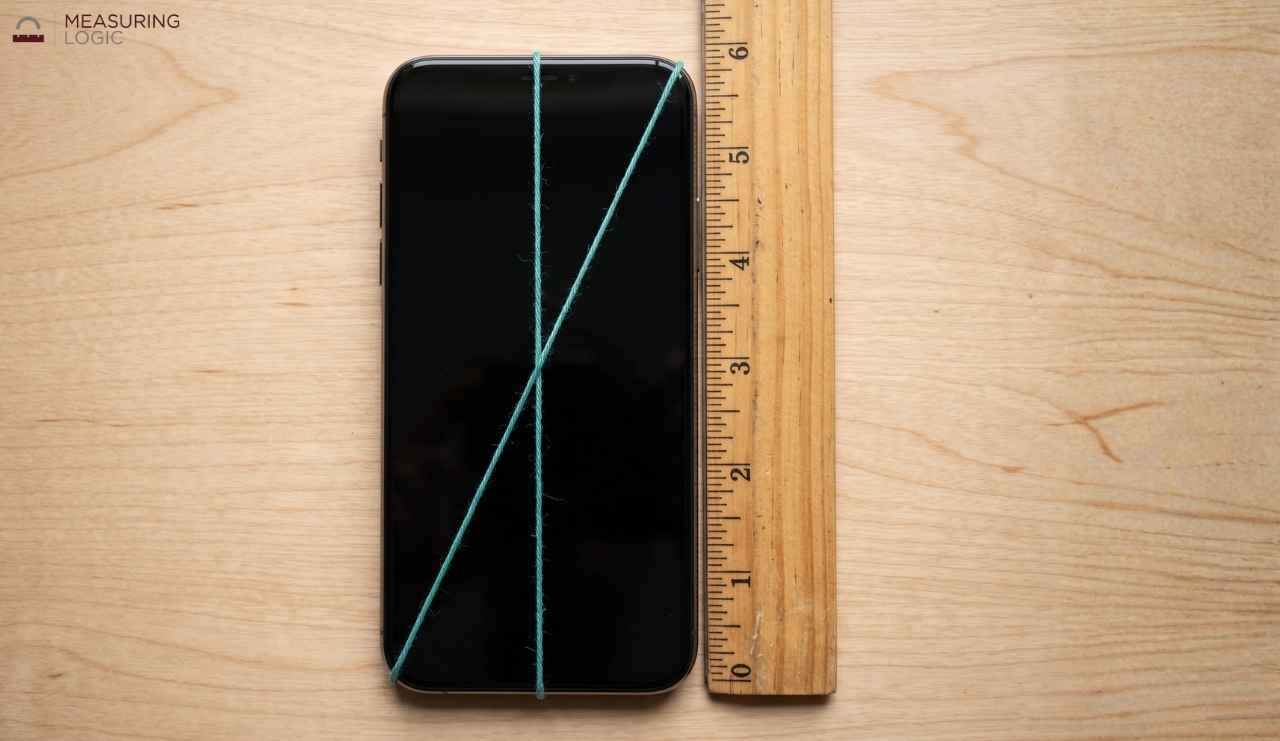
Phone ads promote screen size using the diagonal measurement. As a result, a “6-inch phone” has a screen whose corner-to-corner distance is about 6 inches. The phone’s actual height might be closer to 6.2 or 6.5 inches. Always check both numbers before you buy a case.
See how 24 inches is engineered into everyday life.
6 Inches Comparison: Nearby Sizes
Sometimes you need to place 6 inches among its neighbors. This 6 inches comparison table helps you judge sizes quickly.
| Inches | Centimeters | Feet | Familiar Object |
|---|---|---|---|
| 5 in | 12.70 cm | 0.417 ft | Standard playing card (long side is 3.5 in, so about 1.4 of them) |
| 6 in | 15.24 cm | 0.5 ft | Dollar bill, 4×6 card |
| 7 in | 17.78 cm | 0.583 ft | Dinner fork |
| 8 in | 20.32 cm | 0.667 ft | Small notepad (long side) |
Here’s a quick way to remember how six inches fits the bigger picture:
- 2 six-inch lengths make 1 foot.
- 6 six-inch lengths make 1 yard (36 inches).
- 11 six-inch lengths make 66 inches, or 5 feet 6 inches.
Which Part Of Your Body Is Actually 7 Inches Long? Click To See The Fascinating Details.
Common Measuring Mistakes
Even simple measurements go wrong. Watch for these errors.
- Starting at the ruler’s edge instead of zero. Many rulers have a small blank margin before the zero mark. Always check where zero really sits.
- Mixing diagonal and length. A “6-inch screen” isn’t a 6-inch phone. Likewise, a “6-inch pizza” refers to diameter, not side length.
- Rounding 15.24 cm down to 15 cm. That small loss adds up fast on projects with several parts.
- Letting printed rulers shrink. Browser settings like “Fit to page” change the scale. Set printing to 100% instead.
- Trusting items without checking. A pencil, toothbrush, or butter knife may look close to six inches. Measure before you assume.
- Leaving gaps between coins or batteries. Even tiny spaces add error.
Pro tip: Measure twice and cut once. It’s an old carpenter’s saying because it works.
Try To Picture An Inch, You Will Be Fascinated How Common It Is Through This Guide.
FAQs About 6 Inches
How many centimeters are in 6 inches?
6 inches equals 15.24 centimeters. Multiply 6 by 2.54 to confirm.
How many feet is 6 inches?
It equals 0.5 feet, or half a foot.
How many millimeters are in 6 inches?
There are 152.4 millimeters in six inches.
Is 6 inches the same as 15 cm?
No. 15 cm equals about 5.91 inches. The real match is 15.24 cm.
How many 6-inch lengths fit in a yard?
Six. A yard has 36 inches, and 36 ÷ 6 = 6.
How do I measure 6 inches without a ruler?
Use a 4×6 index card, eight pennies, three AA batteries, or a dollar bill (and subtract a hair for the extra 0.14 inches). Alternatively, calibrate your finger width against a real ruler and reuse that number.
What common object is closest to 6 inches?
The best matches are a 4×6 index card and eight pennies in a row. Both hit 6 inches exactly.
How big is 6 inches in everyday terms?
Think of a dollar bill, a small paperback’s height, or about eight finger widths. It’s compact but easy to picture.
Discover the Engineering Genius Behind Red Bull Can Dimensions
Conclusion
Six inches equals 15.24 centimeters, 152.4 millimeters, or half a foot. Remember that 15 cm falls slightly short. When you need 6 inches fast, grab a 4×6 index card, line up eight pennies, or fold open a dollar bill. Meanwhile, calibrate your fingers against a real ruler once so your own hand becomes a decent backup.
Ready to put this to use? Draw a 6-inch strip on card stock today and keep it where you need it. Or share this guide with a friend who’s always hunting for a ruler.
Discover Why 1000 Feet Is Fascinating And How It Compares To Real-World Landmarks.

Hi, I’m Alice Arthur, the admin behind the Measurements category at Measuring Logic. I research, write, and review accurate measurement guides, unit conversions, and real-world comparisons to ensure every article is clear, reliable, and easy for readers to understand.