
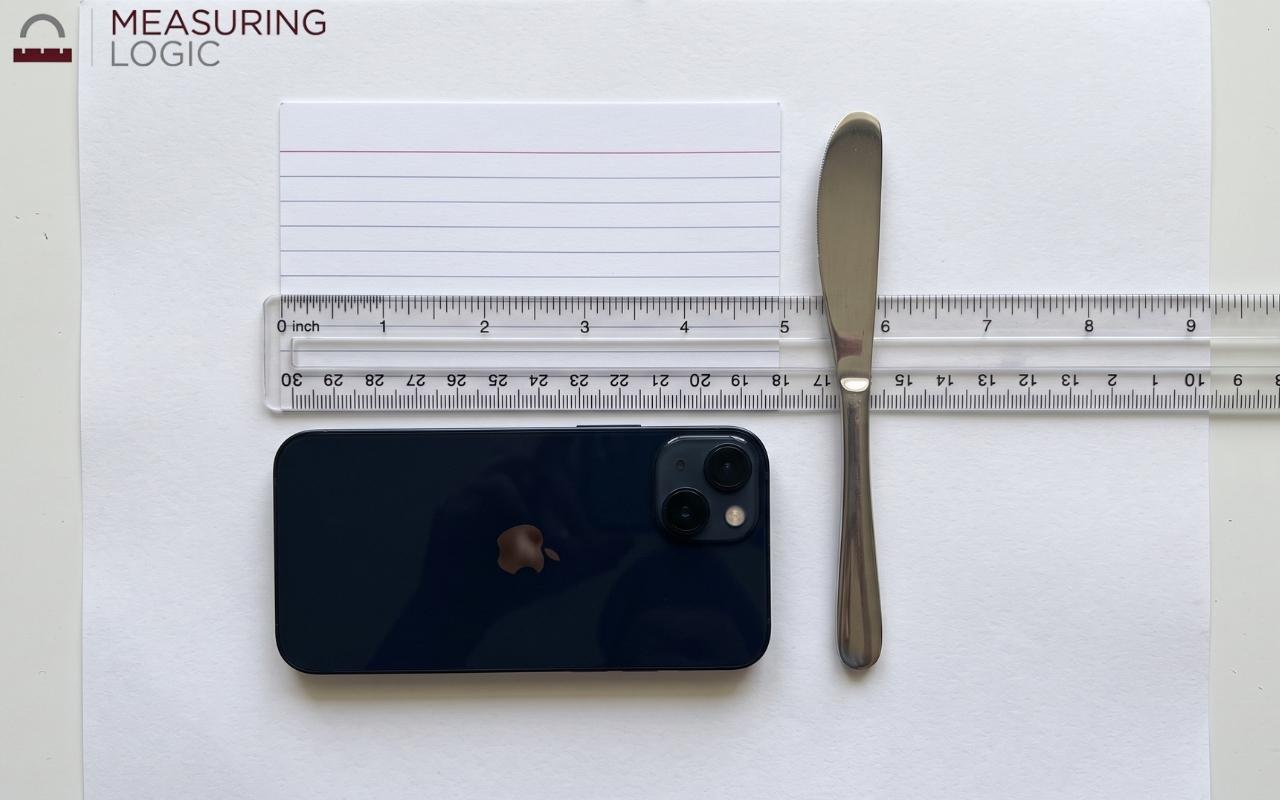
You have probably run into a moment where someone tells you something measures 5 inches, and you nod along without really picturing it. Maybe it is a product listing, a recipe note, or a DIY project that calls for a 5-inch length of something. The number sounds simple enough, but numbers on their own don’t stick. Your brain wants a picture, not a digit.
That’s what this guide gives you. Instead of just stating that five inches equals 12.7 centimeters and moving on, we’re going to walk through common household items and everyday objects you can hold in your hand right now to build a real sense of that length. By the end, you won’t need a tape measure to know what 5 inches long actually looks like.
5 inches: the quick answer
Here’s the number, stripped of any fluff:
5 inches = 12.7 centimeters = 127 millimeters = 0.417 feet
That’s the full measurement, converted across the units you’re most likely to run into. If you want a fast mental anchor, think of it as just over half the length of a standard #10 envelope, or roughly the width of a smartphone held sideways.
5 inches Conversion Chart
Before diving into the object list, here’s a the conversion table you can bookmark. It is handy whether you’re working on a home project, filling out a shipping form, or just satisfying curiosity.
| Unit | Value |
|---|---|
| Inches | 5 in |
| Centimeters | 12.7 cm |
| Millimeters | 127 mm |
| Feet | 0.417 ft |
| Yards | 0.139 yd |
| Meters | 0.127 m |
This inch measurement conversion matters more than people expect. A lot of international product listings use centimeters, so if you’re comparing sizes across US and European sites, knowing that 5 inches sits at 12.7 cm saves you from guessing.
Objects You Already Have in Your Pocket or Bag that measure 5 inches
The fastest way to understand is to check what’s already within arm’s reach. Here are three objects most people carry daily.
iPhone 12 Mini / iPhone 13 Mini both near 5 inches
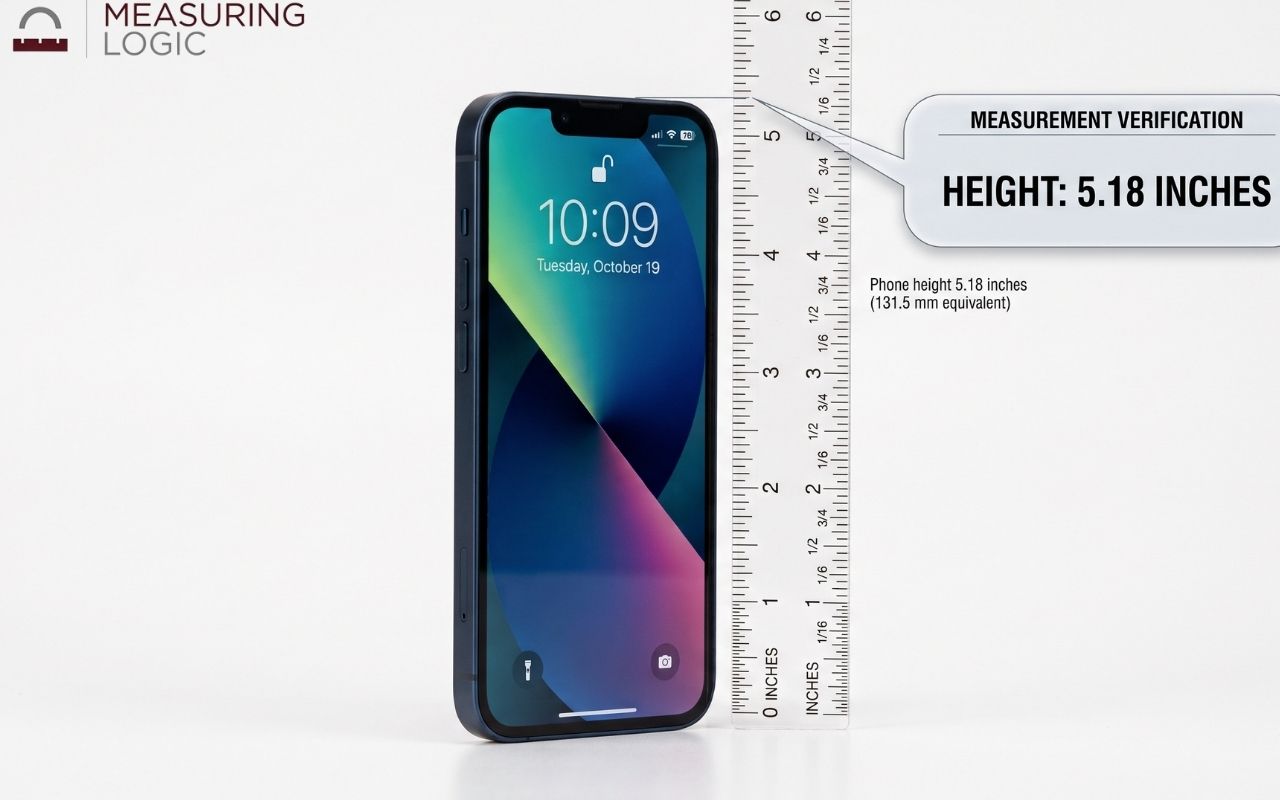
The iPhone 12 Mini measures 5.18 inches tall, and the iPhone 13 Mini comes in at the same height. Out of every object on this list, this is the closest real-world match to a true five-inch measurement. If you or someone nearby owns one of these smaller iPhone models, you’re holding a nearly exact 5-inch length right now. Standard-size phones run longer, usually between 5.8 and 6.7 inches, so don’t grab a regular iPhone or a larger Android phone expecting the same result.
A Closed Wallet
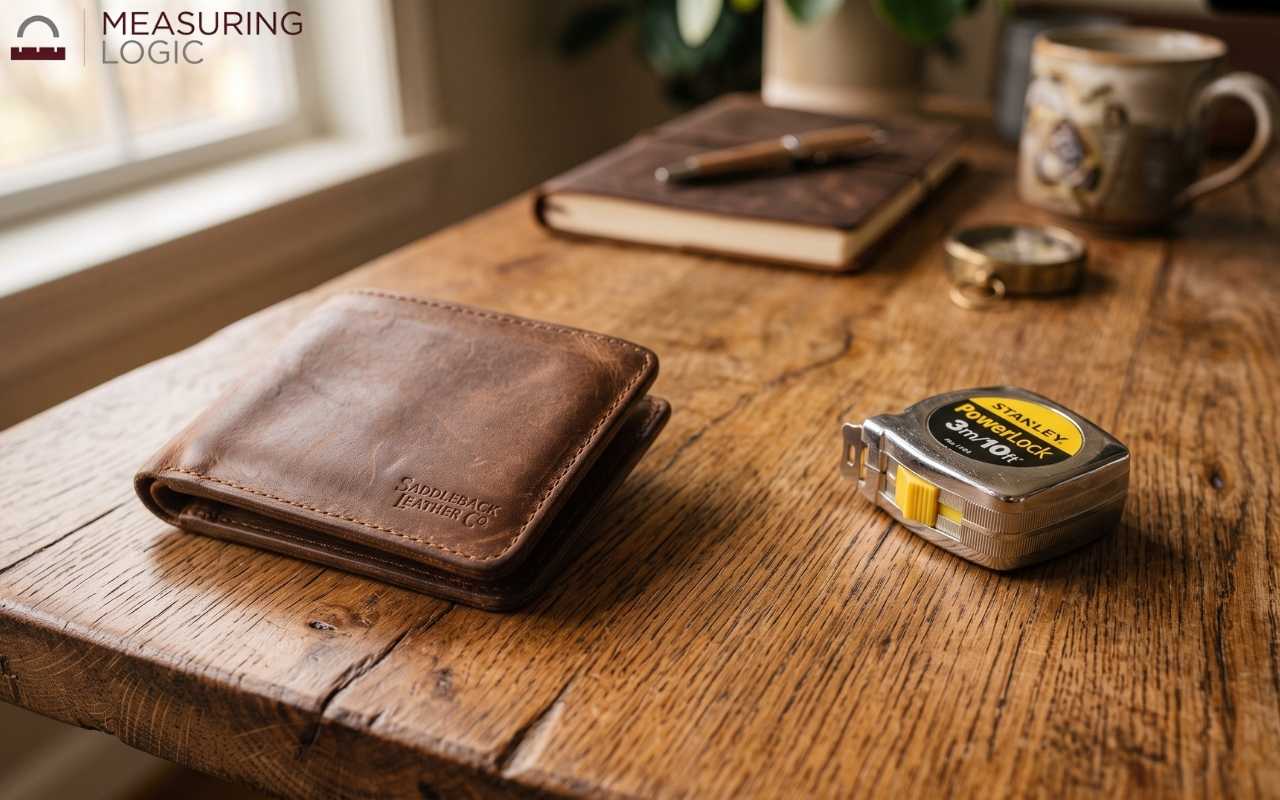
A typical bifold wallet, closed, runs close to 4.5 to 5 inches long depending on the brand and how many cards are stuffed inside. Leather wallets tend to sit right at the lower end of that range, while wallets padded with cash and cards can stretch slightly past it. It’s not a precise measurement reference, but it’s close enough for a quick visual check.
Folded Sunglasses
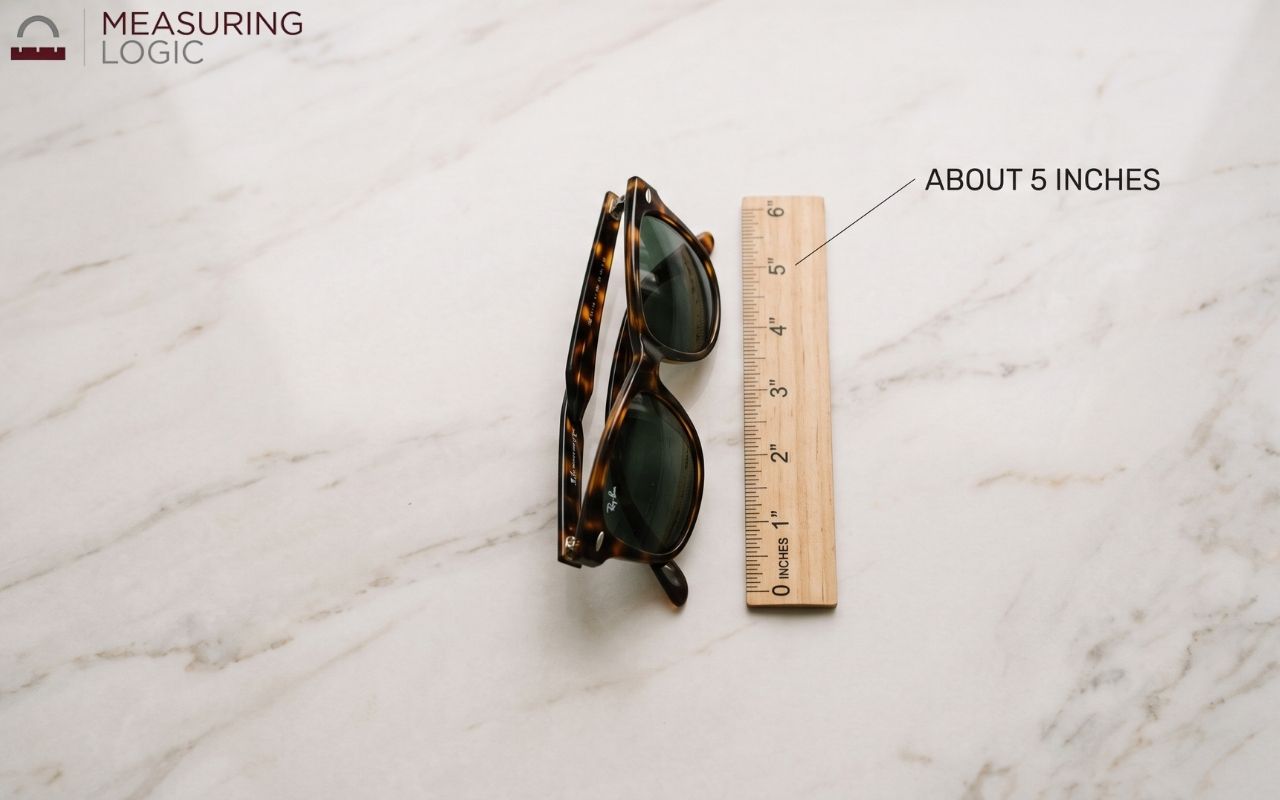
Measure a pair of standard sunglasses from the hinge to the tip of the folded temple arm, and you’ll often land close to 5 inches, depending on the frame style. Larger aviator or oversized frames run a bit longer, while smaller wraparound sport styles run shorter. This is one of those everyday items you don’t think to measure, but once you do, it clicks into place as a solid size reference.
Kitchen & Dining Objects
Your kitchen drawers are full of five-inch objects you’ve probably never measured. Here are three worth knowing.
A Butter Knife: 5 inches at blade
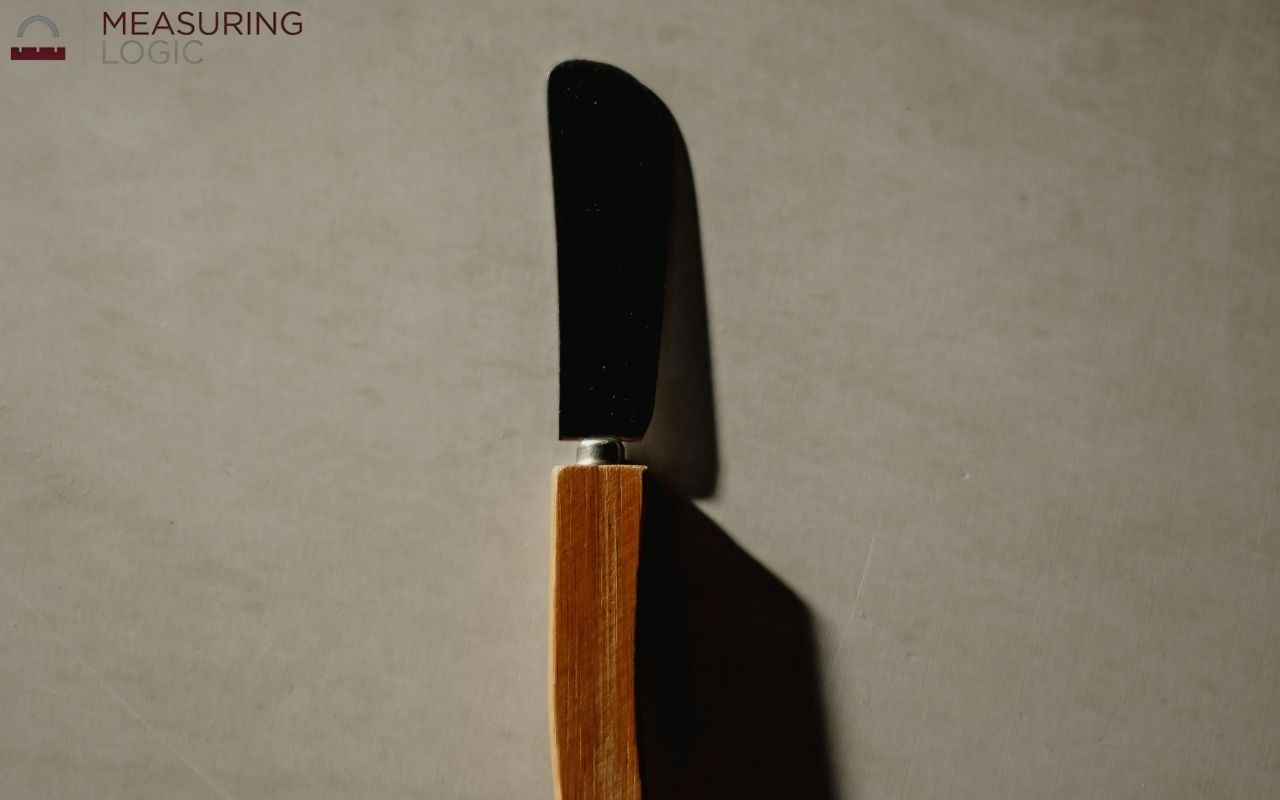
A standard butter knife — the kind used at the dinner table, not a full-size chef’s knife — typically measures between 6.5 and 7 inches total. That’s longer than our target, but the blade portion alone, from tip to bolster, usually lands close to 5 inches. If you own a smaller butter knife or a child-size dining set, the full length itself can hit the mark. This is a useful five-inch knife comparison because almost every kitchen has one within reach.
A Soup Spoon
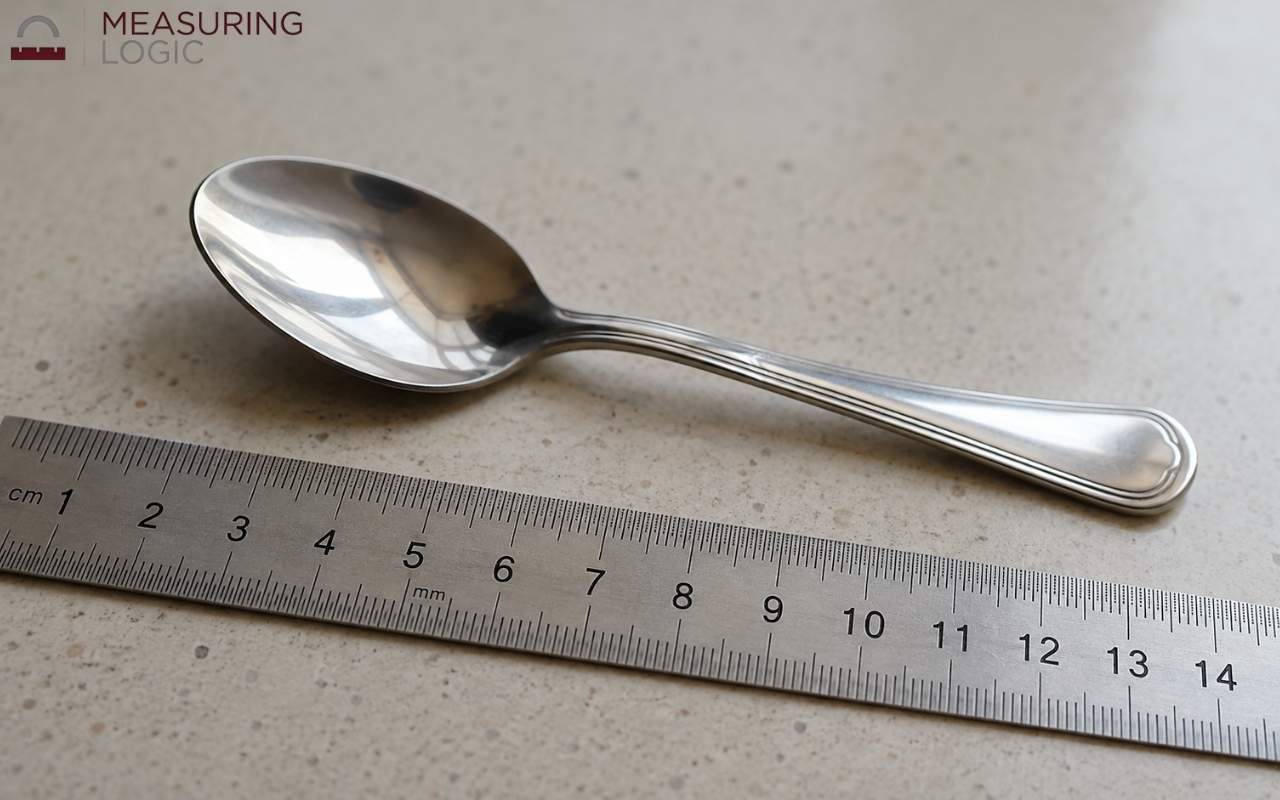
Measured from the tip of the bowl to the end of the teaspoon handle, a standard soup spoon runs close to 6.5 to 7 inches. But if you compare just the handle portion of a smaller teaspoon — the kind used for coffee or dessert — it often sits close to 5 inches on its own. This kitchen measurement trick works well because spoons come in such predictable, standardized sizes.
A Standard Soda Can
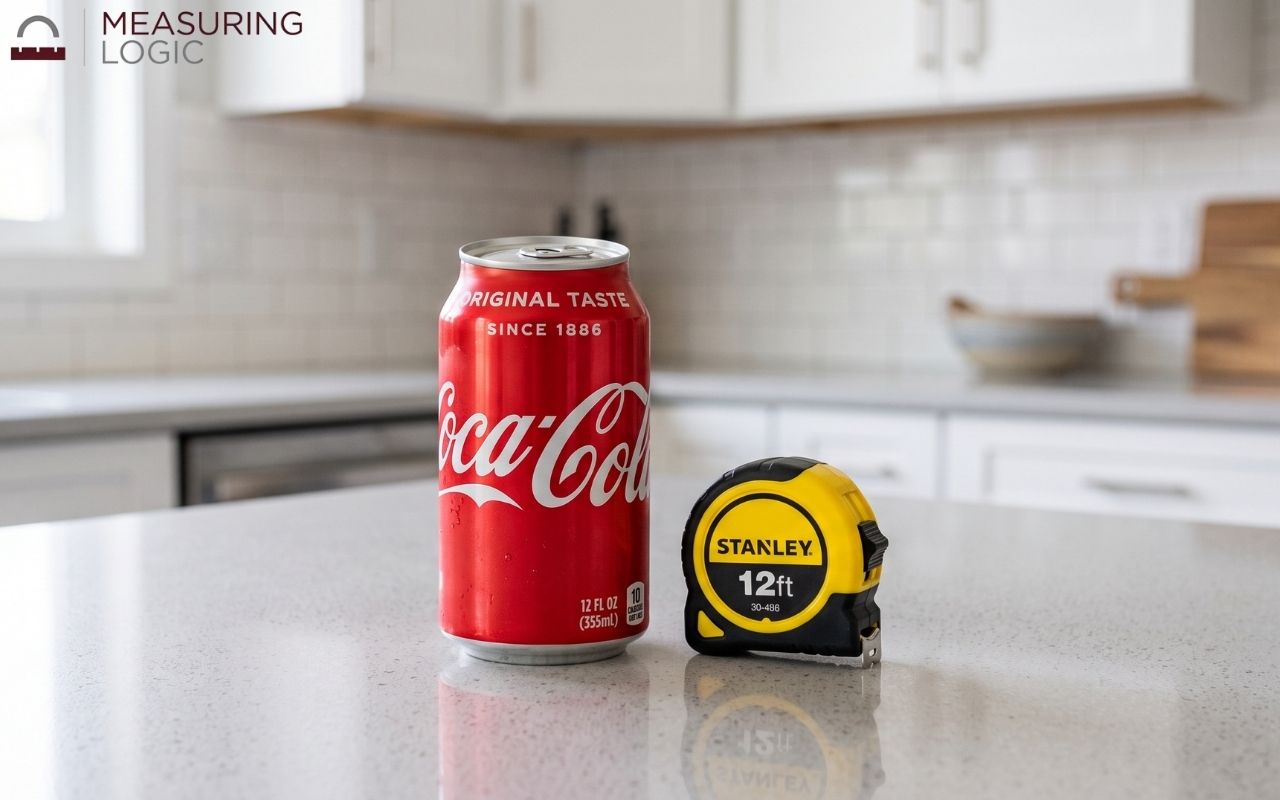
A regular 12-ounce soda can stands 4.83 inches tall, which puts it just shy of a true 5-inch measurement. It’s close enough to use as a mental shortcut, but worth flagging that it falls about 0.17 inches short. If precision matters for your project, don’t rely on a soda can alone — use it as a rough guide, not an exact measuring reference.
Office & Desk Objects
Look around any desk, and you’ll spot several office supplies that hover right around 5 inches.
An Uncapped Ballpoint Pen
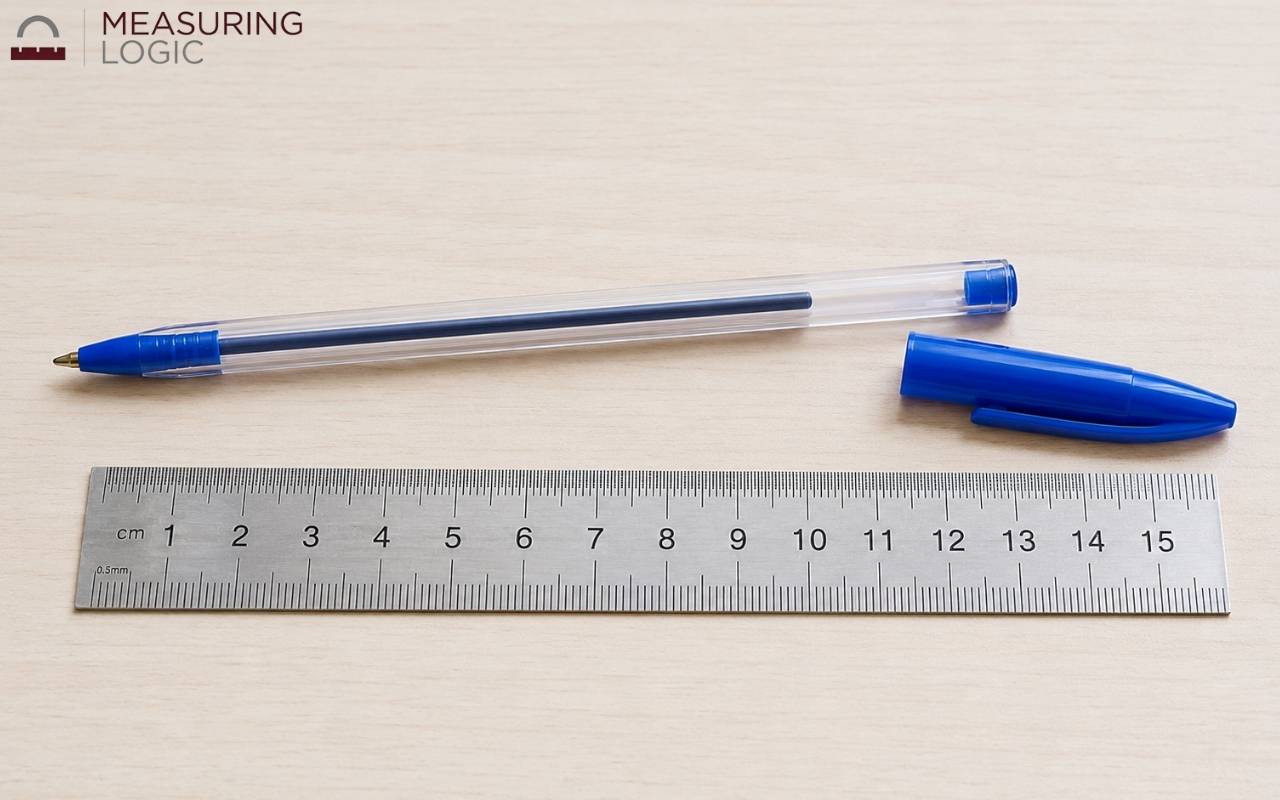
A standard Bic-style ballpoint pen, uncapped, measures close to 5.5 inches — slightly over our target, but near enough to serve as a quick comparison. Slimmer gel pens run a touch shorter, often landing closer to 5.3 inches. Either way, an uncapped pen sitting on your desk right now gives you an instant, no-effort 5-inch reference.
An Index Card
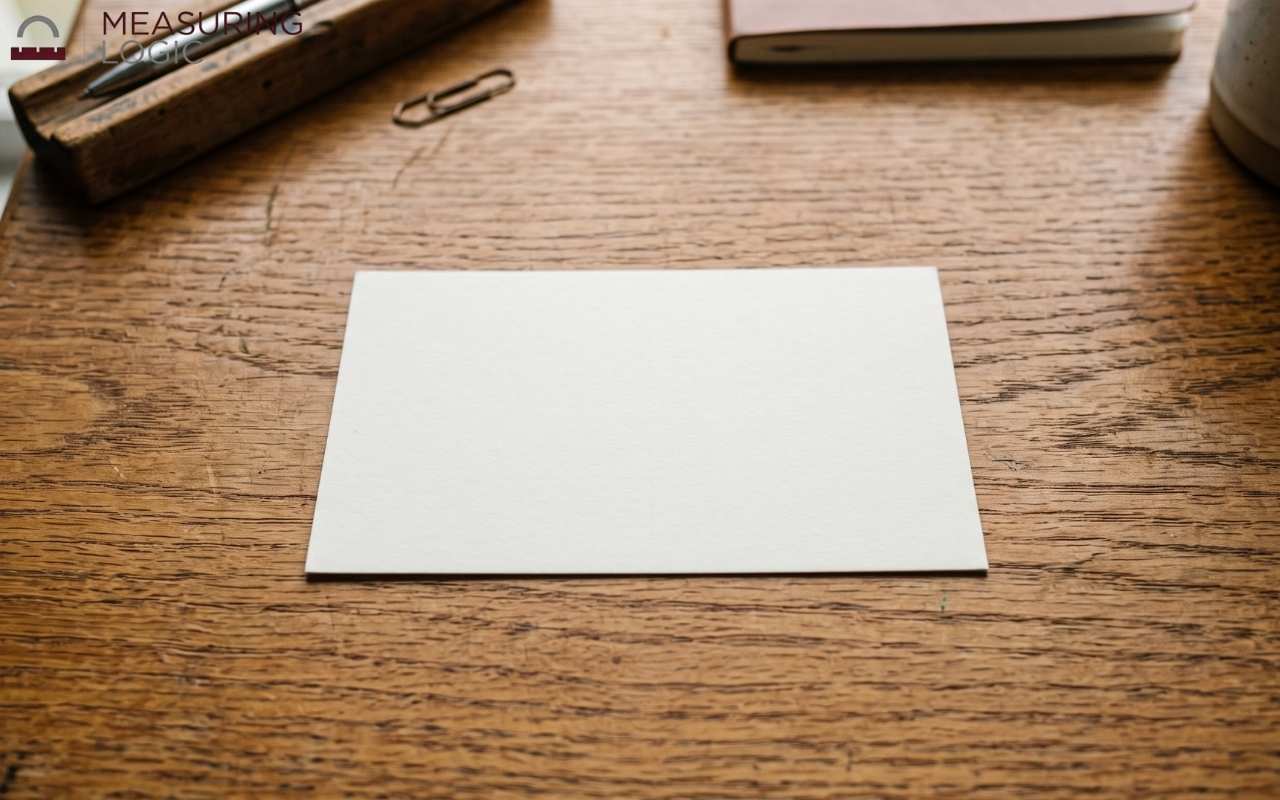
A standard index card measured along its long side runs exactly 5 inches — the classic 3×5 card is quite literally named for its dimensions. This might be the single most precise everyday object on this entire list. If you want zero guesswork, grab a 3×5 index card, and you’re holding an exact five-inch card.
Five Business Cards Lined Up
Standard business cards measure 3.5 inches wide, so five of them edge to edge would run far past our target — that math doesn’t work as a 5-inch reference. Instead, line up about seven business cards end to end lengthwise, or simply stick with the index card above, which gives you a cleaner, more reliable comparison without extra math.
Personal Care Objects you use that are 5 inches
Bathroom drawers hide a surprising number of five-inch objects, mostly because grooming tools are designed for compact, one-handed use.
A Travel Toothbrush
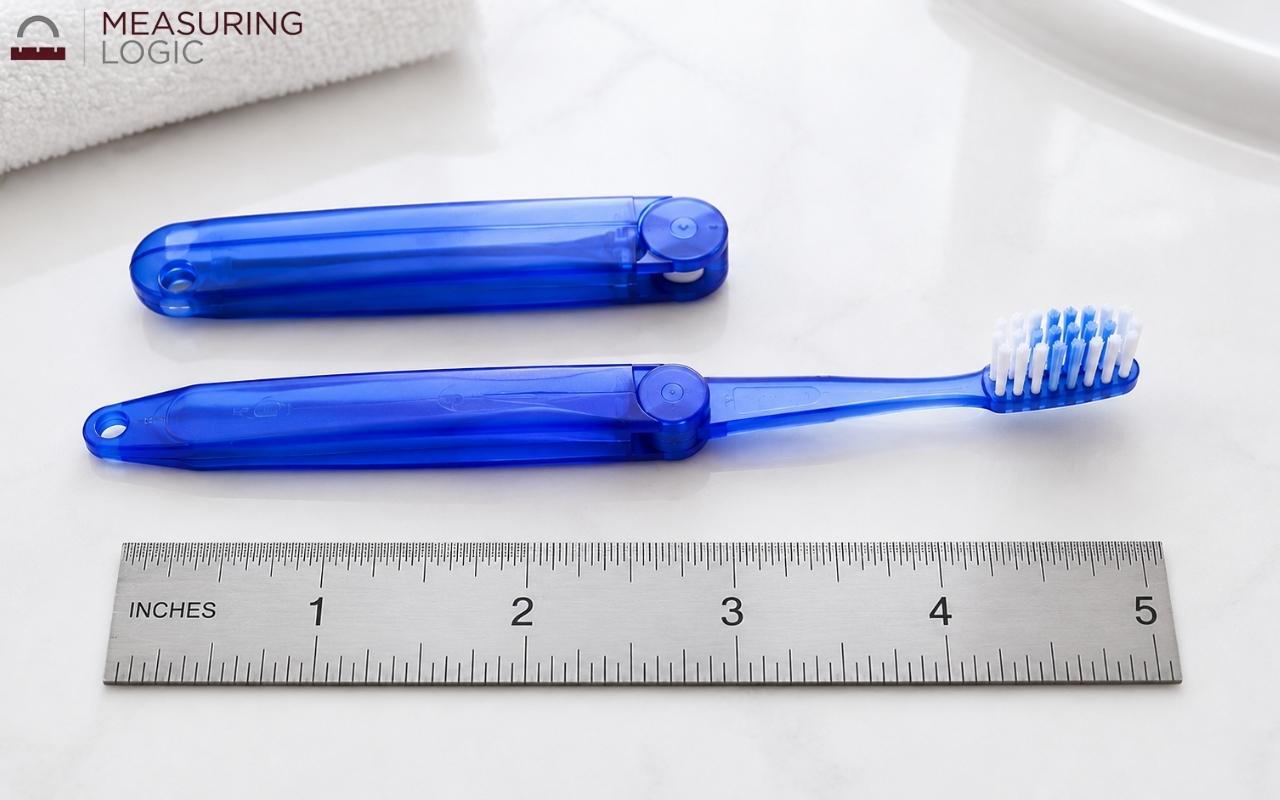
A travel toothbrush — the folding kind sold for trips or gym bags — typically measures between 4.75 and 5.5 inches when fully extended. Folded, it shrinks to roughly half that. This compact toothbrush design makes it one of the more reliable five-inch toothbrush comparisons on this list, especially compared to full-size toothbrushes, which run closer to 7.5 inches.
A Pocket Hair Comb
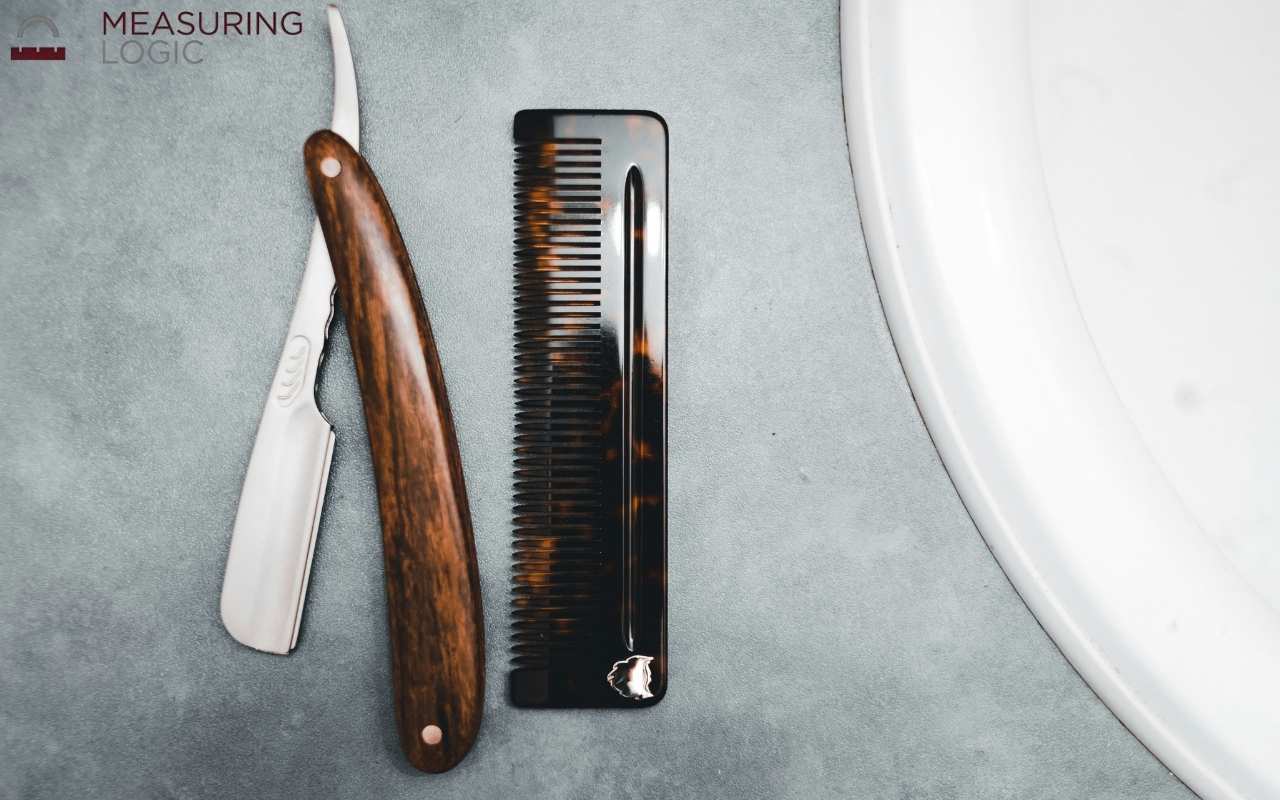
A pocket-size hair comb, the type that fits in a jacket pocket or small bag, usually measures close to five inches long. Full-size combs run longer, often seven to eight inches, so make sure you’re picturing the smaller, folding, or travel version for an accurate comparison.
A Disposable Razor
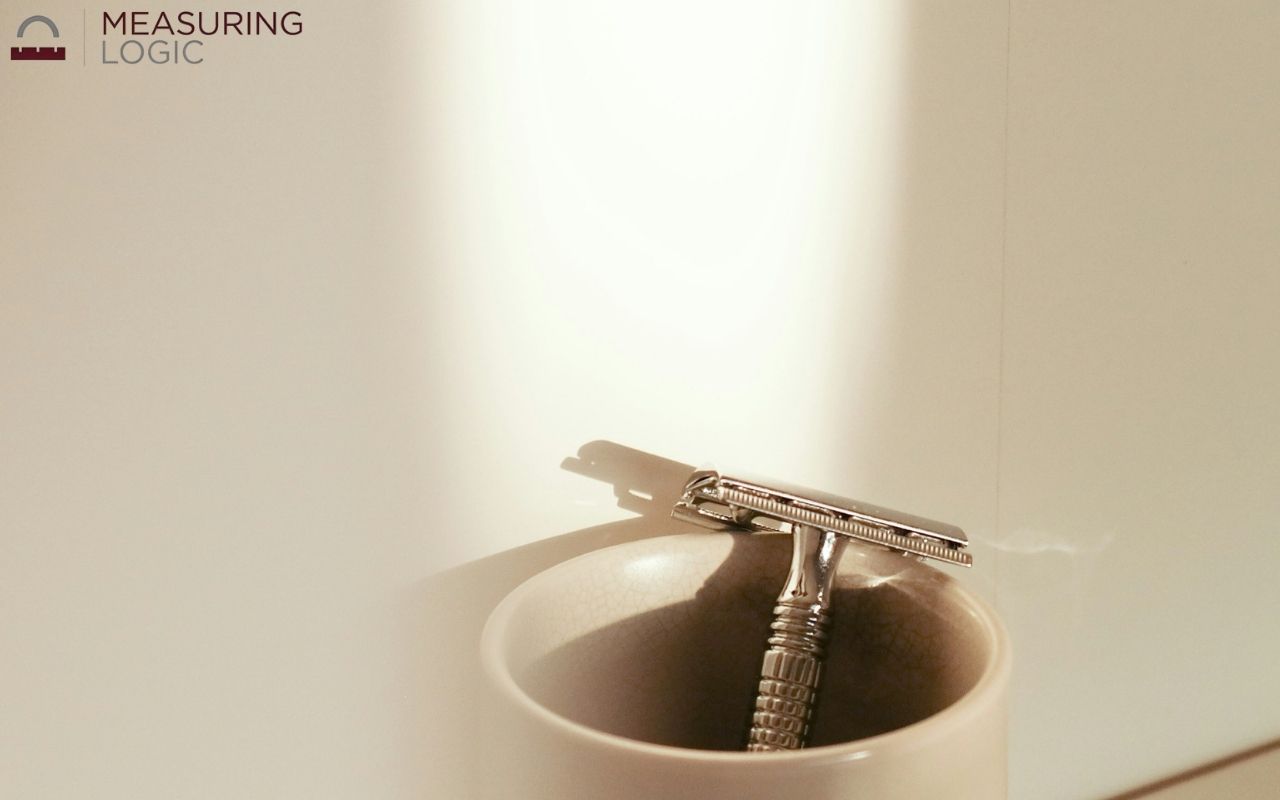
Measured from the top of the razor head to the bottom of the handle, a standard disposable razor often comes in close to 5 inches, though this varies more by brand than most objects on this list. It’s a decent visual reference if you’ve got one in your bathroom cabinet, but treat it as approximate rather than exact.
Household & Everyday Objects
Beyond the kitchen and bathroom, a few more household objects round out this list nicely.
A Compact TV Remote
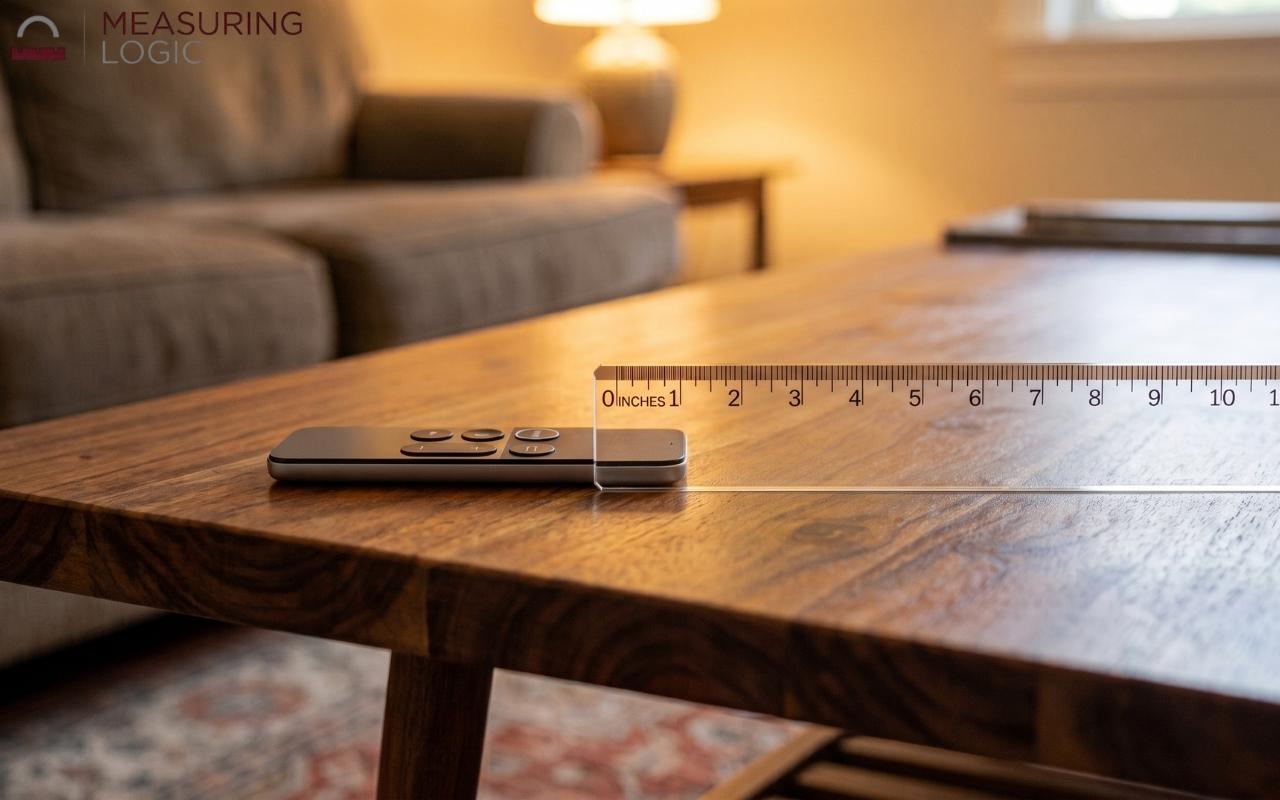
A compact TV remote — think streaming stick remotes for Roku, Fire TV, or Apple TV — usually measures between five and six inches long. That’s notably shorter than a traditional full-size cable or universal remote, which often stretches past nine inches. If you’ve switched to a streaming device in the past few years, you’re likely already holding a solid 5-inch length reference on your coffee table.
A Stack of ten Tea Light Candles

Standard tea light candles measure about 0.5 inches tall each. Stack ten of them, and you’ll reach close to 5 inches — a visual trick that works surprisingly well if you want a hands-on, buildable measurement reference rather than a single object.
A Compact Disc (CD)

A standard compact disc measures exactly 4.7 inches in diameter, making it one of the more precise everyday objects you can use as a 5-inch reference — just slightly under the full mark. If you’ve still got a stack of old CDs or DVDs tucked in a drawer, you’re holding a near-exact five-inch measurement without even reaching for a ruler.
This works especially well as a visual check because CDs are manufactured to a strict, standardized size, unlike objects such as wallets or sunglasses that vary by brand. Next time you need a fast size reference, a single CD case gives you a flat, easy-to-compare surface.
A Stick of Butter
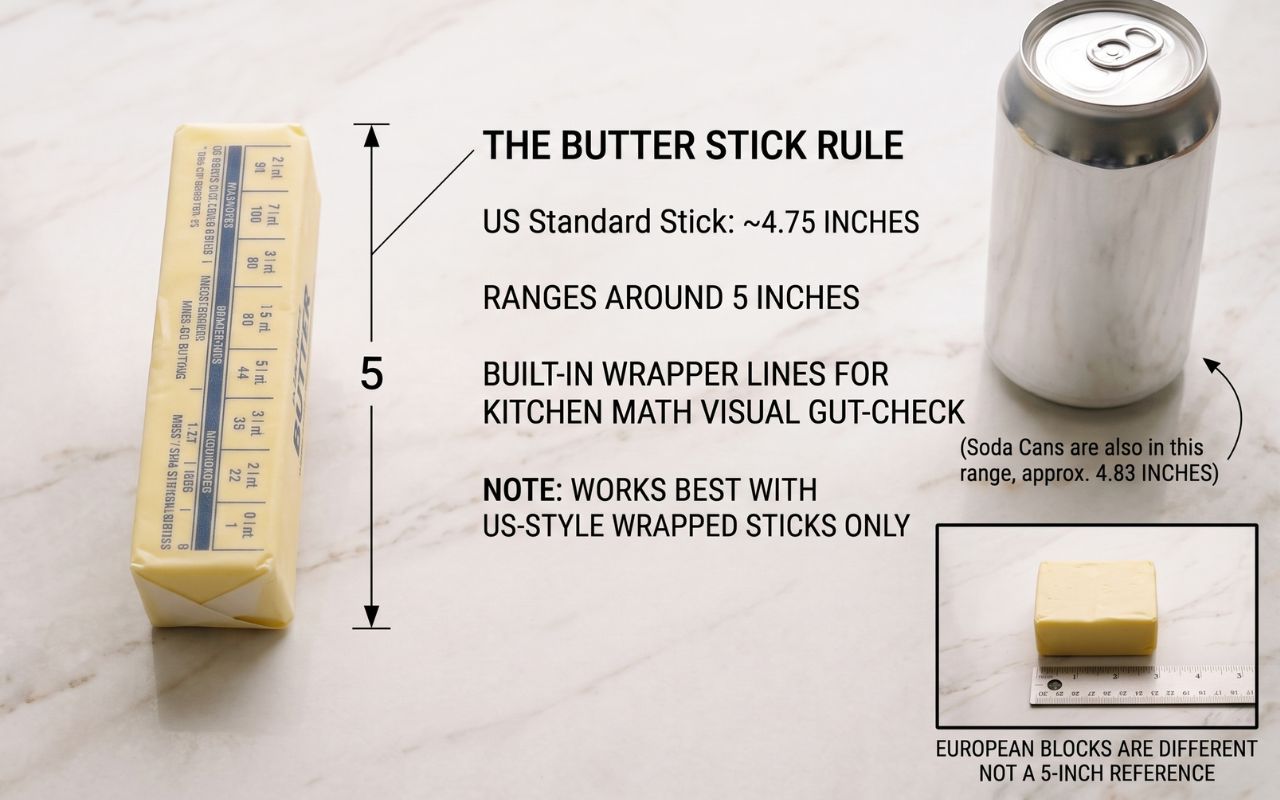
In the US, a standard stick of butter measures 4.75 inches long, putting it right in the same range as a soda can when it comes to approximating 5 inches. Because butter sticks are wrapped with printed measurement lines for baking, they double as a built-in measuring reference most people already have in their fridge.
This is a particularly useful household item for anyone doing quick kitchen math, since you can compare a partially unwrapped stick directly against a recipe card or standard index card for a fast visual gut-check. Keep in mind that European butter blocks are often shaped differently and won’t give you the same 5-inch length comparison, so this trick works best with US-style wrapped sticks specifically.
A Compact Keychain Flashlight
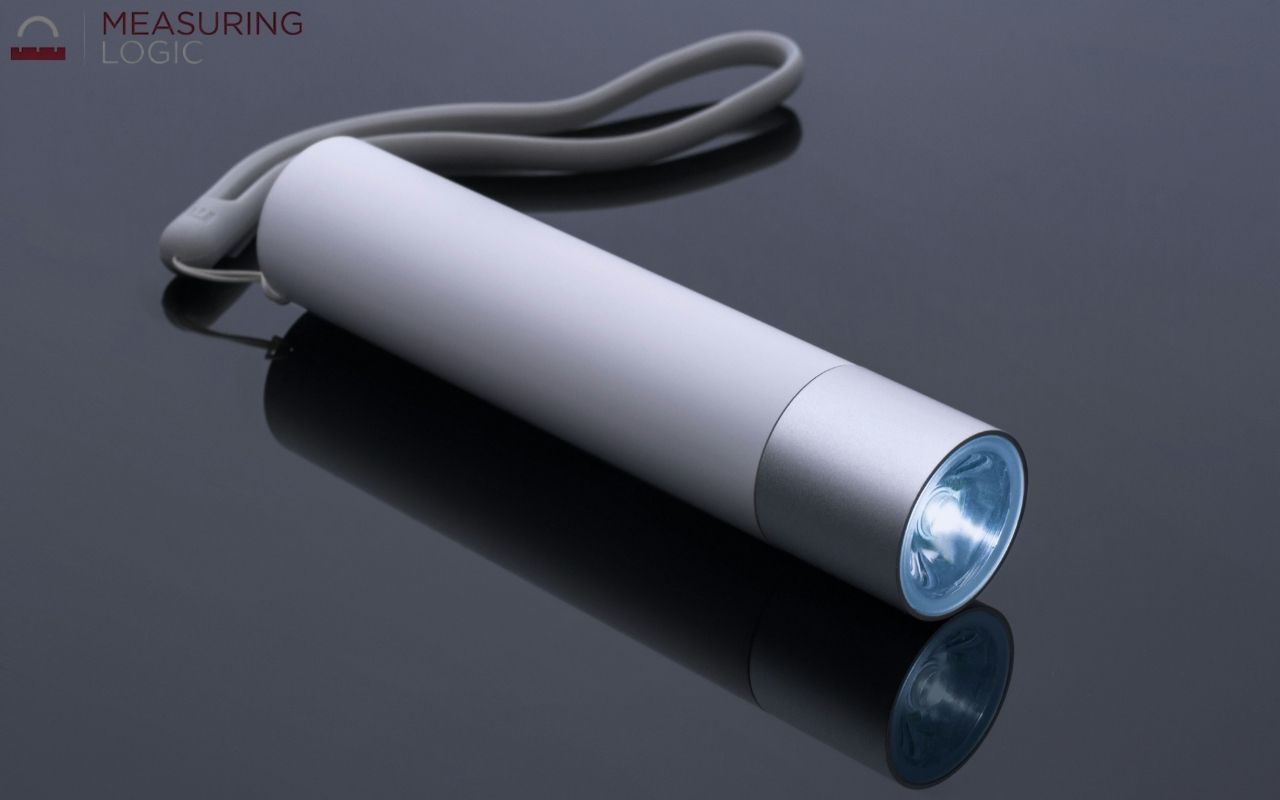
A small keychain or pocket-size flashlight — the kind sold for camping, glove compartments, or emergency kits — typically measures between 4.5 and 5.25 inches long, depending on the brand and battery type. Because these flashlights are designed to be small enough for a keyring but sturdy enough to hold real batteries, manufacturers tend to land right around this length almost by default.
If you keep one in your car, backpack, or junk drawer, it’s a handy, already-in-reach 5-inch length comparison. Larger tactical flashlights run considerably longer, often 6 to 9 inches, so make sure you’re picturing the compact, keychain-style version rather than a full-size model when using this as your visual reference.
Your Palm, Thumb to Pinky Fingertip
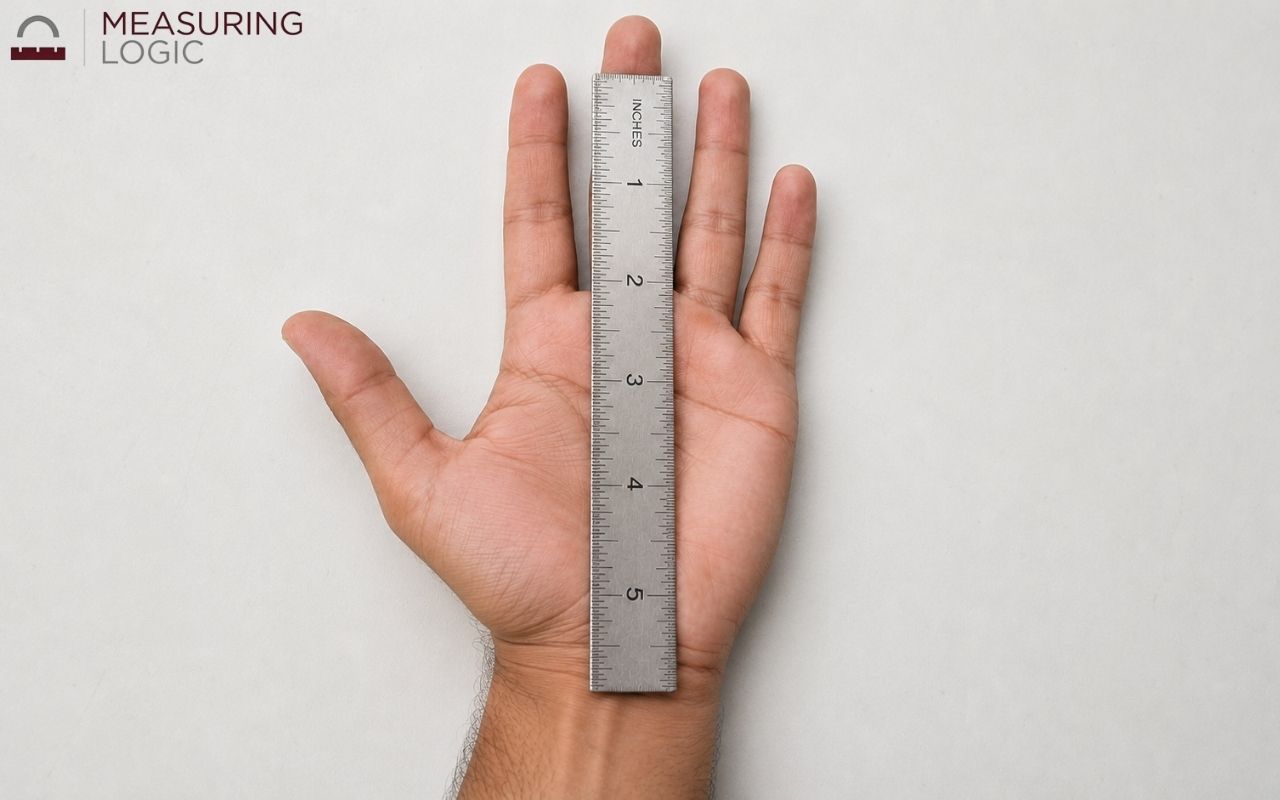
For the average adult, the distance across an open palm — thumb tip to pinky tip — often lands somewhere between 7 and 9 inches, which runs longer than our target. But the distance from wrist crease to the base of the middle finger, on many adults, sits closer to 5 inches. It won’t replace a tape measure, but it’s a genuinely useful without a ruler trick worth remembering.
Discover the Exact Height of 42 Inches with Real-World Examples
How to Estimate 5 Inches Without a Ruler
Sometimes you need a fast answer and don’t have measuring tools nearby. Here are a few reliable without a ruler methods:
- Use your index card trick. Since a standard index card’s long side is exactly 5 inches, keeping one in a drawer or wallet gives you an instant, precise comparison tool.
- Compare to your phone’s width, not height. Most smartphones measure close to 2.8 to 3 inches wide, so roughly one and two-thirds phone-widths gets you close to 5 inches.
- Use a dollar bill. A US dollar bill measures 6.14 inches long — slightly over our target, but folding roughly 80% of its length gets you close.
- Count credit cards. A standard credit card measures 3.37 inches long. One and a half credit cards laid end to end gets you within a fraction of an inch of 5 inches.
None of these replace an actual tape measure for anything requiring precision, but for quick visual checks, they’ll get you close enough almost every time.
How Far Is 500 Feet? (A Fascinating Visual Guide)
Where 5 inches Actually Matter
Knowing this 5 inch measurement isn’t just trivia — it shows up in practical situations more often than you’d expect.
Shipping and packaging. USPS flat-rate small boxes measure roughly 8.6 x 5.4 x 1.6 inches, so understanding what 5 inches looks like helps you judge whether an item will fit before you head to the post office.
Home improvement projects. Many common screws, drill bits, and pipe fittings are sold in lengths at or near 5 inches. Contractors and DIYers reference this length constantly when buying hardware.
Sewing and crafting. Standard seam allowances, pattern pieces, and fabric swatches are frequently cut to 5-inch dimensions, making this one of the most common measurements in a sewing room.
Tech accessories. Phone stands, charging cable lengths, and compact power banks are often designed around a 5-inch footprint to stay pocket-friendly.
As one product design guideline puts it:
“Compact accessories are almost always built around hand-scale measurements — a few inches in any direction changes how a product feels in daily use.”
That’s exactly why so many of the objects on this list — phones, remotes, toothbrushes — cluster so close to the same length. Designers build for the hand, and the hand tends to be comfortable with objects in the 4-to-6-inch range.
Fun Fact: The inch itself has a surprisingly literal origin. In medieval England, one inch was officially defined as the length of three barleycorns laid end to end. It wasn’t until 1959 that the US, UK, and other countries agreed on a standardized inch, fixing it at exactly 2.54 centimeters. So every time you measure something at 5 inches, you’re technically using a unit that traces back to grain, not geometry.
Frequently Asked Questions
Is 5 inches bigger than a credit card?
Yes. A standard credit card measures 3.37 inches long, so 5 inches is about one and a half credit card lengths.
What does 5 inches look like on my phone screen?
Most smartphone screens measure diagonally between 5.5 and 6.7 inches, so it would fall slightly shorter than most modern phone screens but closer to the size of older compact smartphones.
How many centimeters is 5 inches?
It converts to exactly 12.7 centimeters, or 127 millimeters.
What’s an exact 5-inch object I can check right now?
A standard 3×5 index card, measured along its long side, is exactly 5 inches — no rounding required.
Learn about coke can dimensions
Final Thoughts
Numbers only mean something once you can picture them, and that’s the whole point of walking through these everyday objects instead of just handing you a conversion chart. Whether you reach for an index card, a travel toothbrush, or a Mini iPhone, you’ve now got a handful of reliable, real-world ways to recognize a 5-inch measurement without ever picking up a ruler.
From chair heights to large pizzas: [Check out our 18-inch visual guide.]

Hi, I’m Alice Arthur, the admin behind the Measurements category at Measuring Logic. I research, write, and review accurate measurement guides, unit conversions, and real-world comparisons to ensure every article is clear, reliable, and easy for readers to understand.