
Pick up a can of Coke. You’re holding one of the most precisely engineered pieces of consumer packaging on the planet. Every curve matters. Every millimeter of Coke can diameter got decided on purpose. So did every fraction of an inch in Coke can height. None of it happened by accident. None of it’s just for looks.
Manufacturers tweak Coke can dimensions to hit exact targets. They’re aiming for shipping costs, shelf space, and cup holder fit. They also want to shave off aluminum without the can collapsing in your hand.
This guide breaks down every major Coke can size sold today, from the pocket-sized mini to the oversized king can. You’ll get real numbers in inches and centimeters. You’ll also get the reasoning behind each format. And you’ll find answers to the most common questions people search for. Ones like how big a can of Coke really is.
Coke Can Size Comparison at a Glance
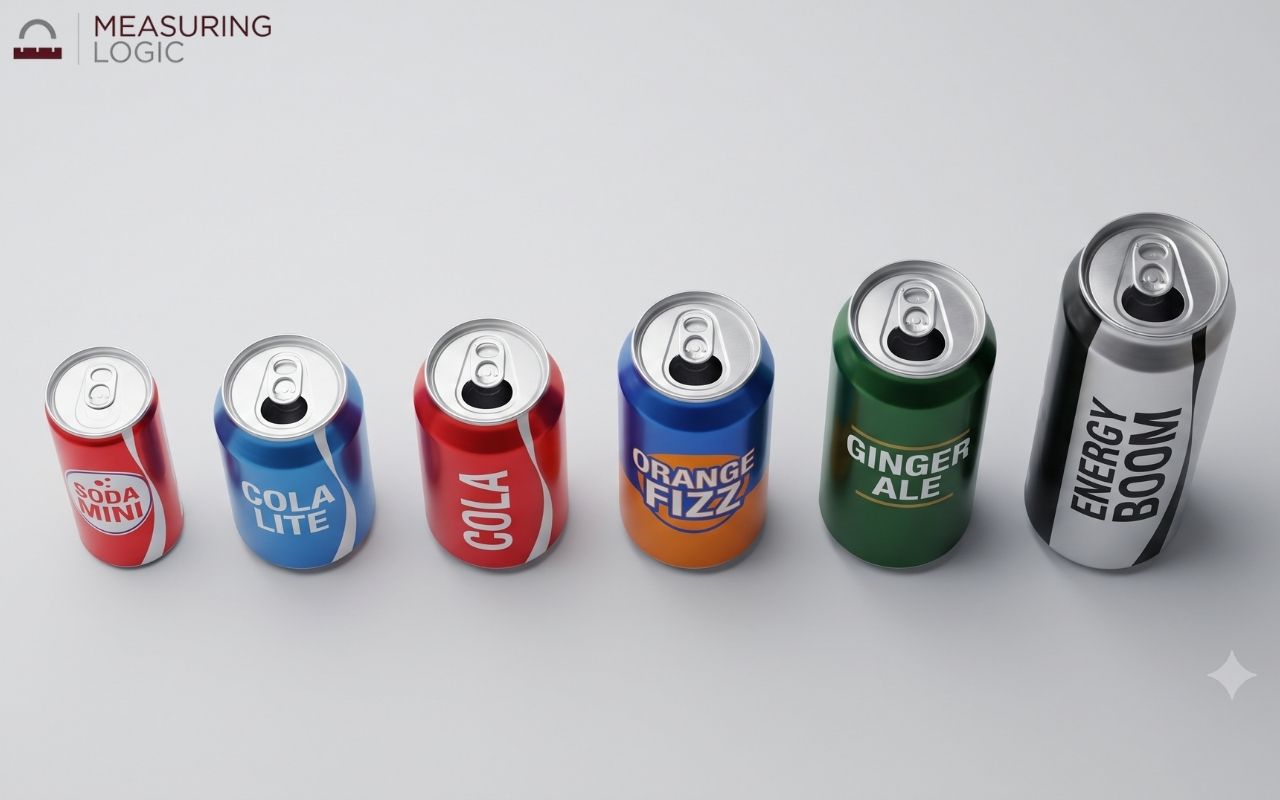
Before diving into each format, here’s the full Coke can dimensions chart. Bookmark this table for fridge layouts and label designs. Or use it to settle an argument about which can is bigger.
| Format | Volume | Height | Diameter |
|---|---|---|---|
| Mini Coke can | 7.5 fl oz (222 ml) | 3.5 in (8.9 cm) | 2.1 in (5.3 cm) |
| Standard Coke can | 12 fl oz (355 ml) | 4.83 in (12.3 cm) | 2.6 in (6.6 cm) |
| Sleek / slim Coke can | 12 fl oz (355 ml) | 6.1 in (15.5 cm) | 2.26 in (5.7 cm) |
| European standard can | 330 ml (11.2 fl oz) | ~4.83 in (12.3 cm) | 2.6 in (6.6 cm) |
| Australian standard can | 375 ml (12.7 fl oz) | 4.9 in (12.4 cm) | 2.6 in (6.6 cm) |
| Tallboy | 16 fl oz (473 ml) | 6.2 in (15.7 cm) | 2.6 in (6.6 cm) |
| Large format / export can | 500 ml (16.9 fl oz) | 6.2–7.5 in (15.7–19 cm) | 2.6 in (6.6 cm) |
| King can | 24 fl oz (710 ml) | ~7.4 in (18.8 cm)* | 2.6 in (6.6 cm) |
*King can height varies more than any other format — some manufacturers run it as tall as 8.5 in. Unlike the 12 oz and 16 oz formats, it isn’t locked to a single strict industry spec.
Notice the pattern? Almost every format shares the same 2.6-inch diameter. That’s not a coincidence — it’s the backbone of the entire can size guide, and we’ll get into exactly why later on.
Standard 12 oz Coke Can

Exact Dimensions of the Classic 12 oz Can
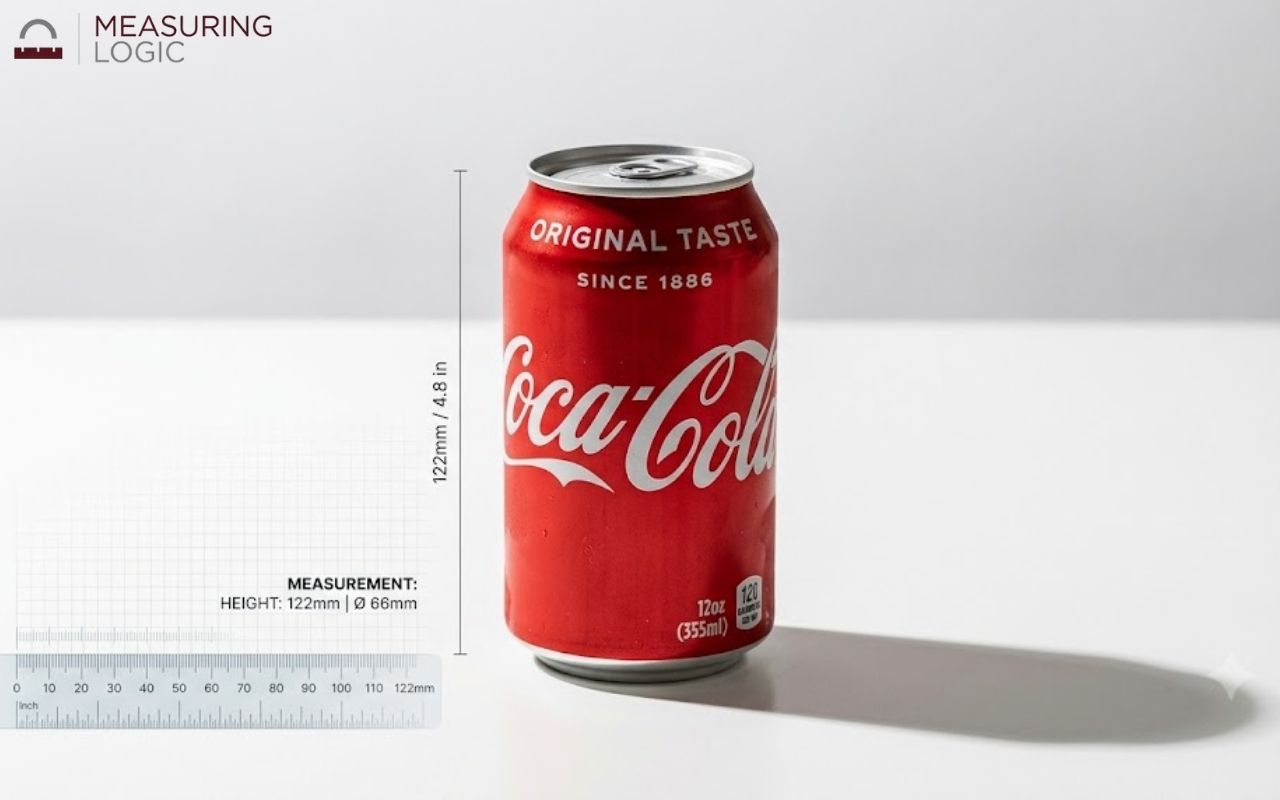
The standard Coke can dimensions are the ones burned into most people’s memory without them even realizing it. A 12 oz Coke can measures 4.83 inches (12.3 cm) tall and 2.6 inches (6.6 cm) in diameter at its widest point. Wrap a tape measure around the middle and you’ll get a circumference of roughly 8.15 to 8.17 inches (about 20.7 cm).
Here’s the fuller spec sheet for the standard 12 oz can:
- Height: 4.83 in (122.7 mm)
- Body diameter: 2.6 in (66 mm)
- Circumference: ~8.15 in (207 mm)
- Lid (top curl) diameter: ~2.13 in (54 mm) — narrower than the body
- Rim / lid end size: “202,” meaning a 2.125-inch opening in the industry’s sixteenths-of-an-inch naming system
- Volume: 12 fl oz (355 ml)
- Empty can weight: approximately 0.5 oz (14 g)
That gap between the 2.6-inch body diameter and the narrower ~2.13-inch lid isn’t a manufacturing quirk. It’s called “necking,” and it exists purely to save metal. More on that below.
If you want a mental anchor for the standard Coke can dimensions, try this: the can is about two-thirds the height of a standard 12-inch ruler, and its diameter is roughly the width of an adult palm plus one finger. Most people can wrap a hand fully around a 12 oz Coke can without stretching their fingers — that comfortable grip width is one reason the format has survived essentially unchanged for decades. Packaging engineers don’t just optimize for cost and shelf space; hand ergonomics factor into the final Coke can diameter just as much as material savings do.
Why 12 oz Became the US Default
The standard soda can wasn’t always 12 oz. Early Coca-Cola cans in the 1960s copied the returnable bottle size that came before them. Once aluminum took over from steel in the late 1960s and early 1970s, the 12-ounce soda can stuck around because it hit a sweet spot: big enough to feel like a full serving, small enough to finish in one sitting without going flat.
By the time canning lines standardized around the 355 ml Coke can, the format had become the reference point every other size gets measured against. When someone Googles “Coke can size” without specifying which one, this is the can they mean about 90% of the time.
“The 12 oz can succeeded because it solved a packaging problem and a consumption problem at the same time — it fit existing bottling infrastructure while matching how much soda people actually wanted to drink in one go.”
Can Anatomy — Neck, Body, and the 202 Lid End Explained
A Coke can measurement breakdown isn’t complete without understanding the three zones of the can itself:
- The base — a slightly concave (dome-shaped) bottom that lets the can stack under pressure without buckling.
- The body — the straight cylindrical section that carries the 2.60-inch diameter measurement and most of the label art.
- The neck and rim — the tapered top section where the diameter shrinks down to the 202 end size before the lid gets seamed on.
That necking process is why the top of a modern Coke can looks noticeably narrower than the base if you look closely. Cans from the 1980s had almost no neck at all — the lid was nearly as wide as the body. Today’s aluminum can design necks in aggressively because a smaller lid uses less metal, and metal is the single biggest cost driver in can manufacturing.
Mini Coke Can (7.5 oz / 222 ml)
Dimensions and How It Differs From the Standard Can
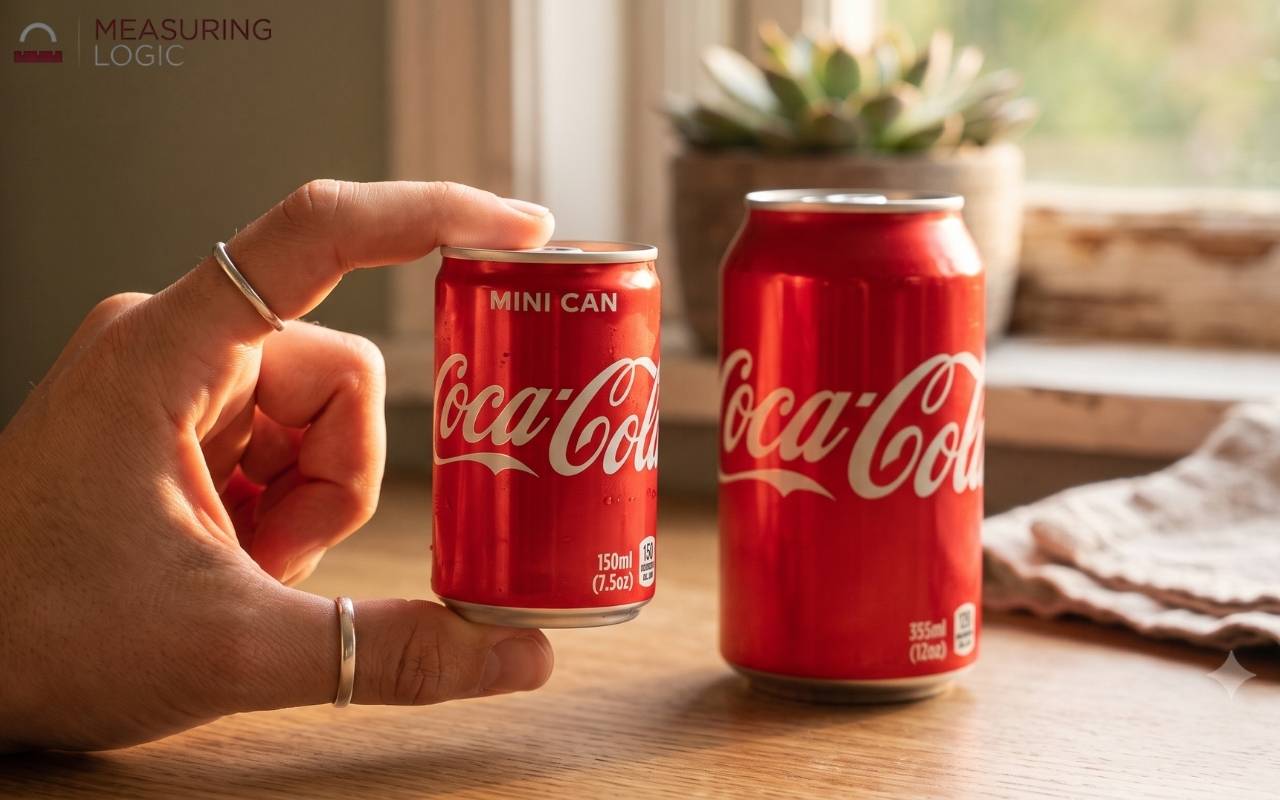
The mini Coke can trades volume for portability. At 3.5 inches (8.9 cm) tall and 2.1 inches (5.3 cm) in diameter, it’s noticeably shorter and slimmer than its standard Coke can counterpart — both dimensions shrink, not just the height.
| Measurement | Mini can | Standard can | Difference |
|---|---|---|---|
| Height | 3.5 in | 4.83 in | -1.33 in |
| Diameter | 2.1 in | 2.6 in | -0.5 in |
| Volume | 7.5 oz (222 ml) | 12 oz (355 ml) | -4.5 oz |
This small Coke can format isn’t just a shrunk-down photocopy — the narrower diameter means it needs its own vending machine coils and cup-holder clearance, unlike the sleek can (which keeps the standard can’s footprint in different ways, covered next).
Why Coke Introduced It in 2007 (Portion Control, Not a New Market)
Coca-Cola rolled out the mini soda can in 2007 during a period when calorie-conscious consumers were pushing back against oversized portions across the entire beverage industry. Rather than reformulate the drink, Coke simply resized the container. A 7.5 oz can holds about 90 calories in the regular formula — a number people could recognize and plan around instantly.
The mini format found its footing in three places:
- Lunchboxes — small enough for kids without adults feeling like they’re pouring a full soda into a child’s meal
- Parties and events — hosts can offer variety packs without every guest committing to a full 12 oz serving
- Diet-conscious households — a portion-control can that doesn’t require willpower to stop halfway through
The mini’s success also proved something packaging teams had suspected for a while: shrinking a soda can dimensions profile doesn’t automatically shrink demand. Coca-Cola didn’t cannibalize its standard-can sales nearly as much as internal projections feared. Instead, the mini created a new occasion — the “just a little” pour — that the 12 oz can was never well suited for. That’s part of why the format expanded from a limited seasonal item into a permanent fixture across Coke, Diet Coke, and Coca-Cola Zero Sugar lineups.
One more detail worth knowing: because the mini can uses a narrower 2.1-inch diameter instead of the standard 2.6-inch can width, it doesn’t always sit flush in cup holders and vending slots designed around the bigger format. Some vending machines run separate coils specifically calibrated for the mini can’s smaller footprint, which is part of why you’ll see it less often in older machines that haven’t been retrofitted.
Sleek / Slim Coke Can (12 oz / 355 ml)
Same Volume, Different Shape
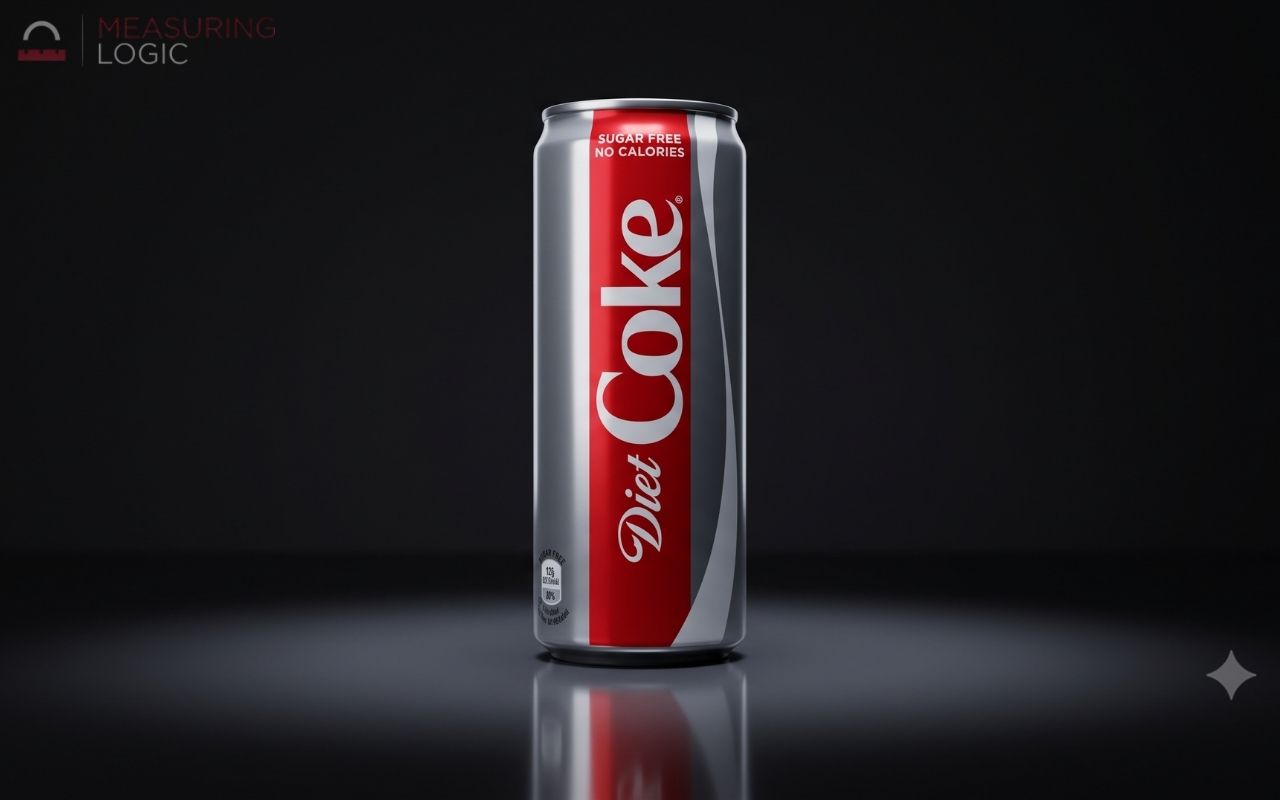
This is the format that trips people up the most. A sleek Coke can holds the exact same 355 ml as a standard Coke can, but it’s built on a completely different mold. The slim can stretches to roughly 6.1 inches (155.7 mm) tall while narrowing down to about 2.26 inches (57.4 mm) in diameter.
| Measurement | Standard 12 oz can | Sleek 12 oz can |
|---|---|---|
| Height | 4.83 in | ~6.1 in |
| Diameter | 2.6 in | ~2.26 in |
| Volume | 355 ml | 355 ml |
| Circumference | ~8.15 in | ~7.1 in |
Notice the volume column doesn’t change. That’s the whole point of the format — Coke can dimensions can shift dramatically in height and width while the actual amount of liquid inside stays fixed. It’s a mold change, not a recipe change.
LEARN HOW BIG IS 100 ACRES IN REAL LIFE
Why the Taller, Narrower Shape Exists
The narrow can silhouette didn’t originate with Coca-Cola. Energy drink and hard seltzer brands popularized the tall, skinny profile first, using it to signal “premium” and “lighter” without changing a single ingredient. Coca-Cola adopted the same sleek can dimensions for Diet Coke and select flavor variants specifically to borrow that visual language.
There’s a psychological effect at work here too, sometimes called the elongation bias: people tend to perceive taller, thinner containers as holding more than shorter, wider ones — even when the actual container size in milliliters is identical. A 12 oz sleek can next to a standard Coke can on a shelf can look like the bigger option purely because of proportions, even though both hold exactly 355 ml.
Retailers have picked up on this too. Sleek cans tend to get priced at a premium over standard cans holding the identical volume, and that premium sticks because the narrow can shape reads as more deliberate — closer to a wine bottle or a spirits container than a mass-market soda can.
Diet Coke’s decision to lean into sleek can dimensions across most of its US lineup wasn’t a packaging afterthought; it was a direct response to how well the shape performed for energy drinks and hard seltzers in the years before Coca-Cola adopted it. When a Coke can format change shows up on shelves, it’s almost always because a competing category proved the shape sells first.
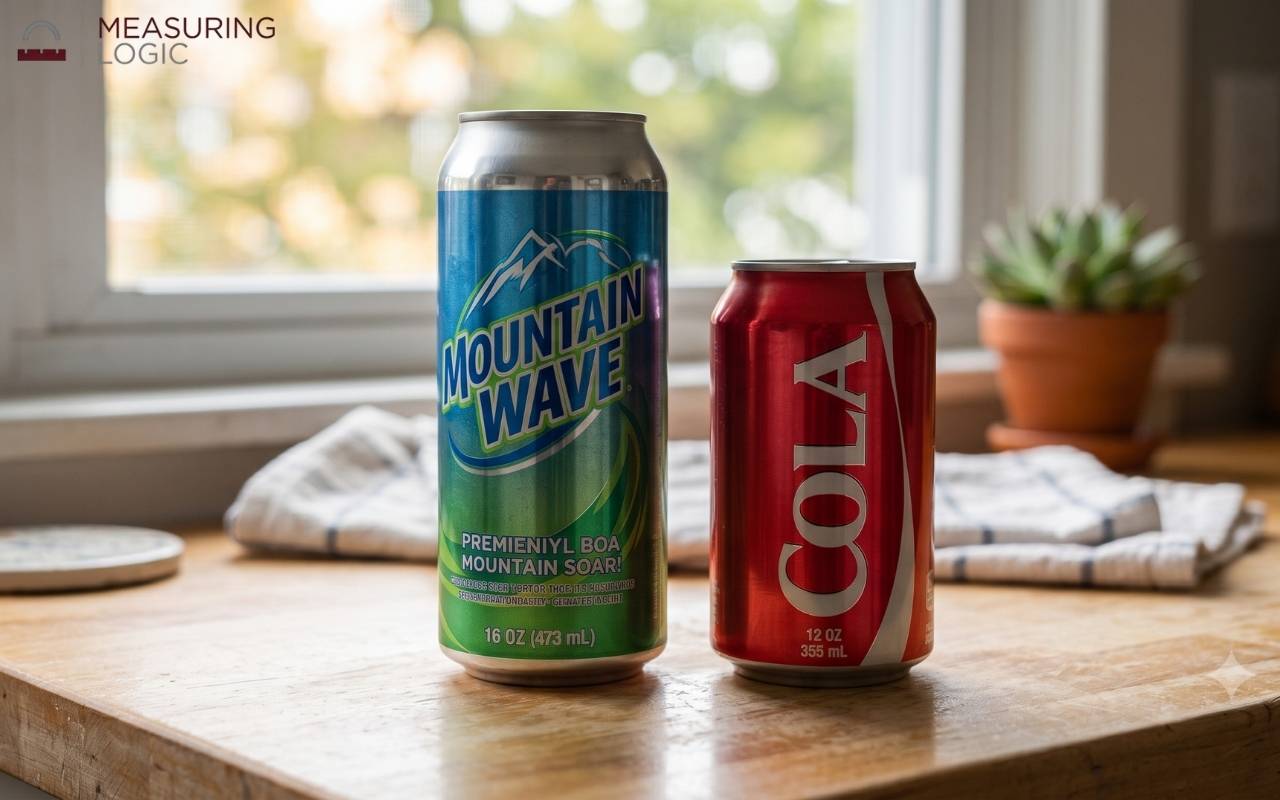
Tallboy Coke Can (16 oz / 473 ml)
Dimensions and Where You’ll Find It
The tallboy keeps the standard can’s 2.6-inch diameter but stretches the height to 6.2 inches (15.7 cm) — about 1.4 inches taller than the regular 12 oz can — to accommodate the extra 4 ounces of liquid. Because the diameter never changes, tallboys run on the exact same production lines, vending machines, and six-pack carriers as the standard format. Only the can height measurement moves.
Quick specs:
- Height: 6.2 in (157 mm)
- Diameter: 2.6 in (66 mm) — identical to the standard can
- Volume: 16 fl oz (473 ml)
- Extra volume vs. standard can: 33% more liquid
You’ll mostly find tallboys in multipacks aimed at bulk value — convenience store coolers, gas station fridges, and 12- or 18-count cases where the per-ounce price beats out buying more 12 oz cans. Because the can diameter matches the standard size, a tallboy still fits in almost every cup holder and vending slot designed for a regular Coke, even though it sticks up noticeably taller.
International Coke Can Sizes
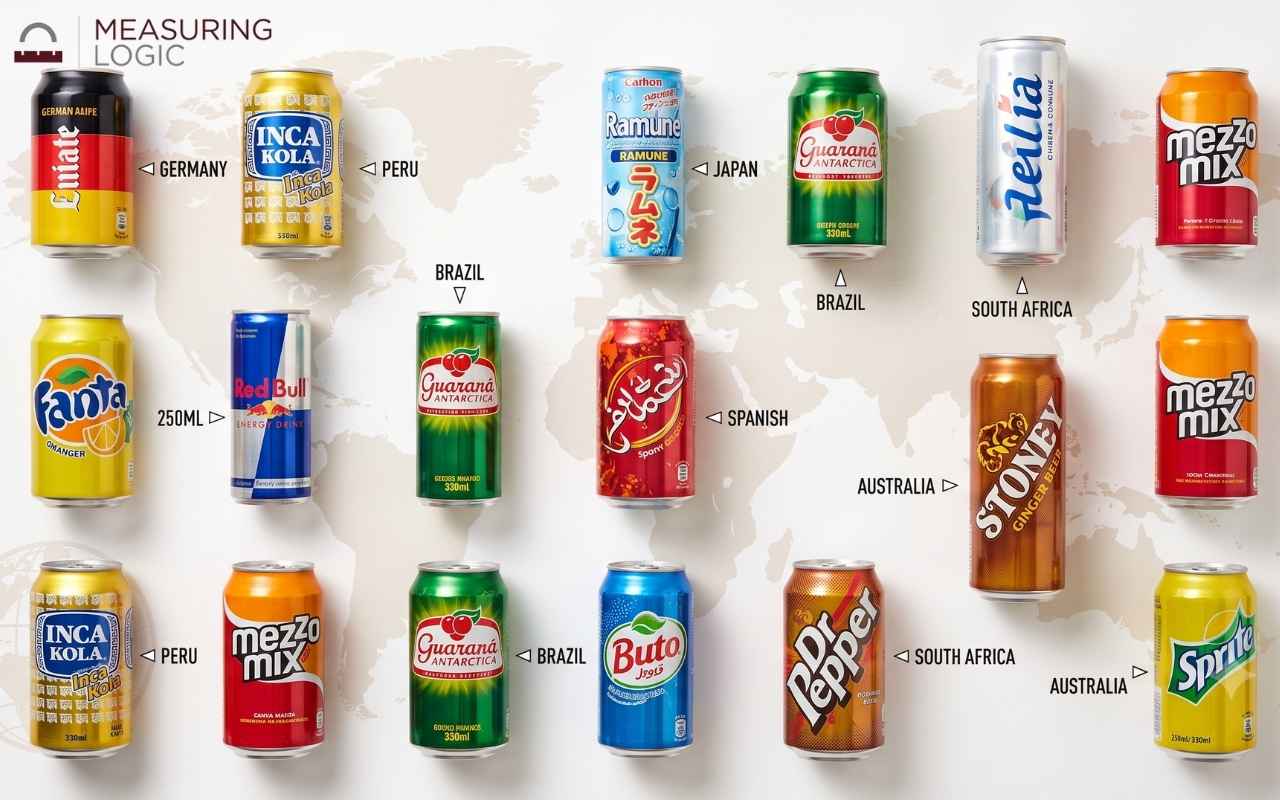
Coke can dimensions in USA markets aren’t the global default — plenty of countries use different volumes entirely, even when the physical can looks nearly identical.
2-Inch Products Used in Our Daily Life
European Standard (330 ml)
The European standard can holds 330 ml (about 11.2 fl oz), which is smaller than the American 355 ml can despite having very similar outer dimensions — roughly 4.83 inches (12.3 cm) tall with the same 2.6-inch (6.6 cm) diameter. The lower fill volume comes from a slightly different internal headspace and can profile rather than a dramatically different can shape. This is the size you’ll run into across most of the EU, the UK, and much of Asia, making it arguably the most-produced Coca-Cola dimensions format worldwide once you count total volume sold.
Australian Standard (375 ml)
Australia runs on its own Coke can sizes standard: 375 ml (12.7 fl oz), measuring about 4.9 inches (12.4 cm) tall with the same 2.6-inch diameter used almost everywhere else. It’s taller than both the American 355 ml can and the European 330 ml can, giving Australian drinkers about 6% more soda than the US standard without the can looking dramatically different on a shelf.
500 ml Large Format
The 500 ml can (16.9 fl oz) is Coca-Cola’s export and convenience-store workhorse in markets that don’t use the tallboy. Height runs anywhere from 6.2 to 7.5 inches (15.7–19 cm) depending on the bottler and region, while the diameter holds steady at 2.6 inches. This format shows up constantly outside the US — often as the single-serve option in countries where the 12 oz can isn’t the cultural default.
| Region | Volume | Height | Diameter |
|---|---|---|---|
| USA | 355 ml (12 oz) | 4.83 in | 2.6 in |
| Europe/UK | 330 ml (11.2 oz) | ~4.83 in | 2.6 in |
| Australia | 375 ml (12.7 oz) | 4.9 in | 2.6 in |
| Export/large format | 500 ml (16.9 oz) | 6.2–7.5 in | 2.6 in |
Across every Coke can format on this list — mini through king can, US through export — the 2.60 inch diameter shows up again and again. That’s not brand consistency for its own sake. It’s an engineering decision, and it’s worth understanding why.
Why These Dimensions Aren’t Arbitrary
Aluminum Use and Cost
Aluminum is priced by weight, and beverage companies produce cans by the billions, so shaving even a fraction of a gram off each can adds up to real money at scale. Modern aluminum beverage container walls run around 0.097 mm thick in the body — down from roughly 0.38 mm in cans from the 1970s — while somehow holding up to more internal pressure than those older, thicker cans ever did.
That improvement comes from lightweight aluminum alloys, not thinner walls alone:
- Can body: typically AA3004 aluminum (or the closely related 3104 alloy), chosen for a strength-to-weight ratio that lets walls get thinner without the can buckling
- Can lid: a different, harder alloy (commonly 5182), because the lid has to resist the internal pressure of a carbonated drink without doming or cracking
The necked-in top on a standard can — where the rim diameter shrinks to roughly 2.13 inches from a 2.6-inch body — exists purely to reduce how much of that harder, more expensive lid alloy each can needs. Multiply a fraction of a cent saved per can by tens of billions of units a year, and necking becomes one of the most financially significant design choices in the entire package.
Cup Holder and Vending Machine Standards
Here’s the real reason the 2.6-inch diameter shows up on nearly every format from mini to king can: automotive cup holders and vending machine coils were largely standardized around it decades ago. Most vehicle cup holders accommodate a 2.5 to 3-inch diameter container, and beverage companies design cans to sit comfortably inside that range rather than force cup holder manufacturers to redesign around every new can shape.
This is also why sleek and slim cans — which break from the 2.6-inch standard — sometimes wobble in older cup holders designed before the format existed. The can width mismatch is a direct trade-off brands accept in exchange for the premium visual appeal of a narrower profile.
Pallet and Shelf Efficiency
Retail shelf density and pallet stacking both depend on predictable can dimensions. A shelf planner working with a fixed standard Coke can dimensions footprint can calculate exactly how many units fit per row, per shelf, and per pallet layer without guessing. Change the diameter and every downstream calculation — truck loading, warehouse racking, retail planograms — has to be redone.
This is part of why genuinely new Coke can sizes are rare. Coca-Cola would rather adjust height (which barely affects pallet math) than diameter (which affects almost everything). That’s the actual engineering logic behind why so many formats in this guide share the same 2.6-inch body diameter while height does all the work of hitting different volumes.
Think about what changing the diameter would actually require. Every case tray, every shrink-wrap machine, every cooler shelf bracket, and every vending machine coil in the supply chain gets built around one fixed can size comparison baseline.
That’s why beverage can sizes across the entire industry, not just Coca-Cola, cluster around a small handful of standardized diameters instead of a wide spread of custom widths. Pepsi, Dr Pepper, and most domestic beer brands land on close to the same 2.6-inch can diameter for exactly this reason.
There’s a carbonation angle here too. A cylindrical can distributes internal pressure evenly across its walls, which is why virtually every carbonated beverage can sizes format — Coke included — sticks with a round cross-section rather than anything square or rectangular.
The 2.60 inch diameter isn’t just a supply-chain convenience; it’s close to the sweet spot where wall thickness, pressure resistance, and material cost all balance out for a 12 oz volume.
How Long Is 5 Inches? 18 Everyday Objects for visualization
Frequently Asked Questions
Is a Coke can the same size as a beer can?
For the 12 oz format, yes. Coke cans and most American beer cans share the same 202 end size. They also share the same roughly 4.83-inch height. And the same 2.6-inch diameter. That standardization exists for a reason. Both industries draw from the same can manufacturers. They use the same production equipment too. So a soda can and a beer can from the same era and volume end up functionally interchangeable in size. The printing and branding look completely different, though.
What does the 202 end size mean?
“202” is shorthand from the beverage can industry’s sizing code, where the first digit represents whole inches and the remaining digits represent sixteenths of an inch. A 202 end works out to a lid opening of 2.125 inches — the most common rim diameter on standard 12 oz Coke and soda cans across North America. You’ll also see “204” on some specialty formats, which indicates a slightly wider lid opening.
Why do slim cans hold the same amount as standard cans?
Volume depends on the total internal space of the can, not just its diameter. A sleek can dimensions profile compensates for its narrower 2.26-inch diameter by adding extra height — roughly 6.1 inches instead of 4.83 inches — so the total internal volume still comes out to 355 ml. It’s the same principle as pouring water into a tall, skinny glass versus a short, wide one: different shape, same amount of liquid, as long as the math on both dimensions balances out.
How many 12 oz cans fit on a standard fridge shelf?
This depends entirely on your specific fridge, but you can estimate it using the standard can measurements above. Since a standard Coke can measures 2.6 inches in diameter, cans placed upright and side-by-side take up roughly 2.6 inches of shelf width each (plus small gaps for handling).
A typical 18-inch-wide refrigerator shelf comfortably fits around 6 cans in a single row, with vertical clearance of at least 5 inches needed to accommodate the can’s 4.83-inch height plus room to grab it without tipping neighboring cans.
How big is a king can compared to a standard Coke can?
The king can holds 24 fl oz (710 ml). That’s exactly double a standard 12 oz can. But it doesn’t double in height. Most run around 7.4 inches tall. The diameter stays familiar too, at 2.6 inches throughout. The 12 oz and 16 oz formats follow one universal spec. The king can doesn’t. Height can swing by close to an inch depending on the bottler. This format just sees less standardization pressure than the higher-volume mainstream sizes.
Do all Coke can sizes use the same aluminum?
Mostly, yes. Nearly every Coke can format uses AA3004 aluminum for the body. That’s true from mini cans to king cans. A close cousin, 3104, shows up too. The lid gets a harder alloy instead. Volume doesn’t change the alloy choice. A mini can and a king can come from the same family of aluminum sheet. They just get formed into different shapes. Wall thickness is what actually changes in a few specialty formats. Slightly thicker walls compensate for a taller profile. The sleek can is a good example — it’s more exposed to pressure.
The Bottom Line
Every Coke can size on the market from the pocket-friendly mini to the shelf-dominating king. All of them trace back to the same handful of engineering constraints. How much aluminum a can uses, how well it fits existing cup holders and vending machines, and how it stacks on a pallet.
The 2.60-inch diameter ties almost every format together. While height does the heavy lifting whenever Coca-Cola needs to hit a new volume target. Measurements behind each format is a tightly engineered system built around one very consistent number.
Learn How Red Bull Cans Are An Engineering Marvel
Short Quiz
How Well Do You Know Coke Can Dimensions?
1. How tall is a standard 12 oz Coke can?
A) 3.5 inches B) 4.83 inches C) 6.1 inches D) 7.4 inches
2. What diameter do most Coke can formats share, from mini to king can?
A) 2.1 inches B) 2.26 inches C) 2.6 inches D) 3.0 inches
3. A sleek/slim 12 oz can holds the same volume as a standard can. What actually changes?
A) Nothing — it’s identical in every way B) It gets taller and narrower C) It gets shorter and wider D) It uses a different alloy
4. What does the “202” end size refer to?
A) The can’s release year code B) A 2.125-inch lid opening C) The aluminum alloy grade D) A regional volume standard
5. Why does can diameter rarely change across formats, even when volume does?
A) Diameter changes would require redesigning pallets, coolers, and vending coils B) Coca-Cola is legally required to keep one diameter C) Aluminum can’t be shaped into other widths D) Diameter has no effect on production costs
Answers:
- B — The standard 12 oz can stands 4.83 inches (12.3 cm) tall, the most common beverage can height in the US.
- C — The 2.6-inch diameter shows up across nearly every format, built around cup holder and vending machine standards.
- B — Sleek cans trade diameter for height, running about 6.1 inches tall and 2.26 inches wide, while keeping the same 355 ml volume.
- B — 202 is industry shorthand for a 2.125-inch lid diameter, the most common lid size on standard 12 oz cans.
- A — Changing height just means a taller case. Changing diameter means redesigning trays, shelving, and vending equipment across the whole supply chain.
Picture 18 Inches Visually Through This Guide

Hi, I’m Freddie Cove, the author for the Dimensions category at Measuring Logic. I create well-researched articles that explore the dimensions of everyday objects, products, and structures, helping readers compare sizes and find accurate, easy to understand information.